Winter Skincare Tips for Dry, Sensitive Skin
Winter is in full force, and our skin is definitely feeling it! Today we are going to talk about why the skin becomes dry in the winter, but also how to gently care for it topically, and how internal factors can worsen dry skin. We will also share our recommendations for each skin type and our favorite product suggestions, so you can start to combat your dry skin this winter.
How to Make Skin Look Better in the Winter
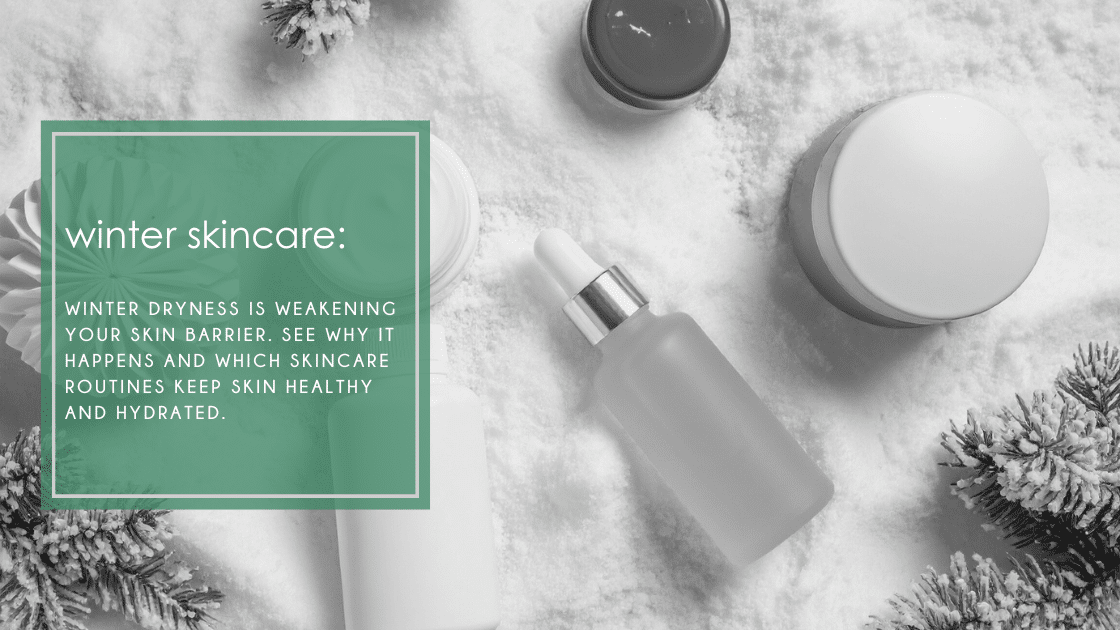
Winter brings cold, dry air, something our skin hates. The reason our skin looks dull and dry is because there’s less moisture in the air. When the air gets dry, it pulls water from the skin. This is called Transepidermal Water Loss (TEWL) and it means water is evaporating from the skin. Science Direct defines it, “Transepidermal water loss (TEWL) is the amount of water that passively evaporates through skin to the external environment due to water vapor pressure gradient on both sides of the skin barrier and is used to characterize skin barrier function.” TEWL increases in the winter due to low humidity and can be accelerated by using the wrong skincare products that break down the skin barrier.
What Can You Do for Dry Skin in the Winter?
There are several ways you can decrease dry skin. Adding a humidifier to your bedroom at night gives your skin moisture so the dry air doesn’t pull water from your skin while you sleep. Make sure to drink water and stay hydrated. Remember, it’s not always about drinking more water. It can be the fact that you’re not holding water in. Taking electrolytes can make the water you’re drinking circulate more efficiently in your body. Limit your time outdoors if possible. Walks are great, but if there’s strong winds or extremely cold temps, you’re better off staying indoors to protect your skin.
Is Vitamin C Serum Good for Winter?
The answer is both yes and no. Vitamin C is a powerful antioxidant that fights what we call free radicals, unstable molecules that damage the cells and DNA, speeding up the aging process. Vitamin C is known for its brightening properties and ability to fight aging so it is a great ingredient. However, in its pure form, L-Ascorbic Acid, Vitamin C acts like an acid and if you have dry, dehydrated, sensitive, or reactive skin, this ingredient is not recommended. For these skin types, Vitamin C will irritate the skin. For these skin types, the gentler the better, especially in winter.
What is the Best Skincare Routine for Winter?
Simple is best in the winter. Often we see consumers buying multiple serums and overdoing the skincare. Not to mention, exfoliating too much because the skin is flaky and dry, so we believe that we need to slough the dead skin off. But, instead this worsens your skin and only leads to barrier damage and skin sensitivity. Last week, in our podcast, we interviewed a skincare formulator who talked about harmful ingredients and fragrance in clean beauty. We recommend taking a listen to understand skincare products better.
We recommend…
- Switching to a gentle oil or cream cleanser
- Using a hydrating serum, such as hyaluronic acid
- Applying a heavy moisturizer to seal in hydration
- Exfoliating no more than once per week with a gentle exfoliant
Simple is best when it comes to repairing your skin barrier and preventing transepidermal water loss.
Internal Factors that Impair Skin Healing
We talk a LOT about the importance of a healthy gut and how that can impact the health of your skin. The gut and skin are connected through the Gut-Skin-Axis, a communication pathway connecting your gut and skin. Our skin is a detox organ, if there is inflammation or an imbalance within the body, your skin is going to show it. Not only in the form of skin inflammation like acne, rosacea, or eczema, but in slower wound healing or a damaged skin barrier.
Mid-County Dermatology’s definition, “This changes everything about skincare: Recent research reveals that your gut microbiome is the master controller of your skin health.” If you are serious about healing your dry skin this winter, it’s time to do a gut check. At Skin Deep Esthetics, we now offer functional medicine and can do gut testing to determine what imbalances are affecting your skin. Our goal is to get to the root cause of your skin problems.
Here’s our recommended winter skincare routines for each skin type:
Winter Skincare Routine for Dry Skin
Dry and Dehydrated skin needs to focus on keeping the skin barrier supported, hydrated, and preventing evaporation. However, many factors can cause dry skin, such as menopause, hormonal fluctuations, age, and medications.
Here is a simple skincare routine for dry or dehydrated skin:
Use a cream or oil cleanser twice daily
Exfoliate once a week
Use a hyaluronic acid serum, layered under a hydrating serum twice daily
Apply a facial oil for extra hydration at night
Top with a heavy moisturizer twice daily
Winter Skincare Routine for Normal or Combination Skin
Barrier support is also important for this skin type, because you can cause the skin to become dry if you overdo the skincare or are using harsh skincare products to combat the oiliness that combination skin can experience, especially in the T zone.
Here is a simple skincare routine for normal or combination skin:
Use a cream or oil cleanser twice daily
Exfoliate once a week
Use a hyaluronic acid serum, at night and if your skin can tolerate it, Vitamin C serum in the morning
Top with a medium weight moisturizer twice daily
Winter Skincare Routine for Oily Skin
Oily skin types are the most prone to dehydration in the winter, because we believe that we have to strip the oil away. However, if you are doing this, not only are you compromising your skin barrier, but you are increasing oil production. When transepidermal water loss happens, your oil glands increase production to compensate for the lack of water. This is why your skin begins to feel both oily and dry at the same time. Hydration is key to balancing oil.
Here is a simple skincare routine for oily skin:
Use a cream or gel cleanser twice daily
Exfoliate once a week
Use a hyaluronic acid serum, at night if your skin feels dry
Top with a lotion twice daily
Winter Skincare Routine for Acne-Prone Skin
Acne-prone skin can be either dry or oily depending on your age or hormonal fluctuations. If you’re dealing with hormonal acne, you don’t want to use acne skincare products, because these will cause the skin to become dry and sensitive. Hormonal acne skin types tend to be on the combination/dry skin types. If you are younger and have oily skin, see the oily skin recommendations above.
Here is a simple skincare routine for acne-prone skin:
Use a cream or gel cleanser twice daily
Exfoliate once a week
Use a hyaluronic acid serum, 1-2 times daily, depending on your skin type
Spot treat with an acne serum at night
Top with a lotion or moisturizer for acne-prone skin twice daily
If you have questions about your skin type or product recommendations, you can always schedule an appointment or give us a call. We are happy to help you understand your skin better so you can select the right products for your skin.
Ready to Get Started?
If you’re ready to tackle winter skincare for good so your skin begins to look and feel better, please visit our website to get started today. Got questions? Drop them in the comments below.