
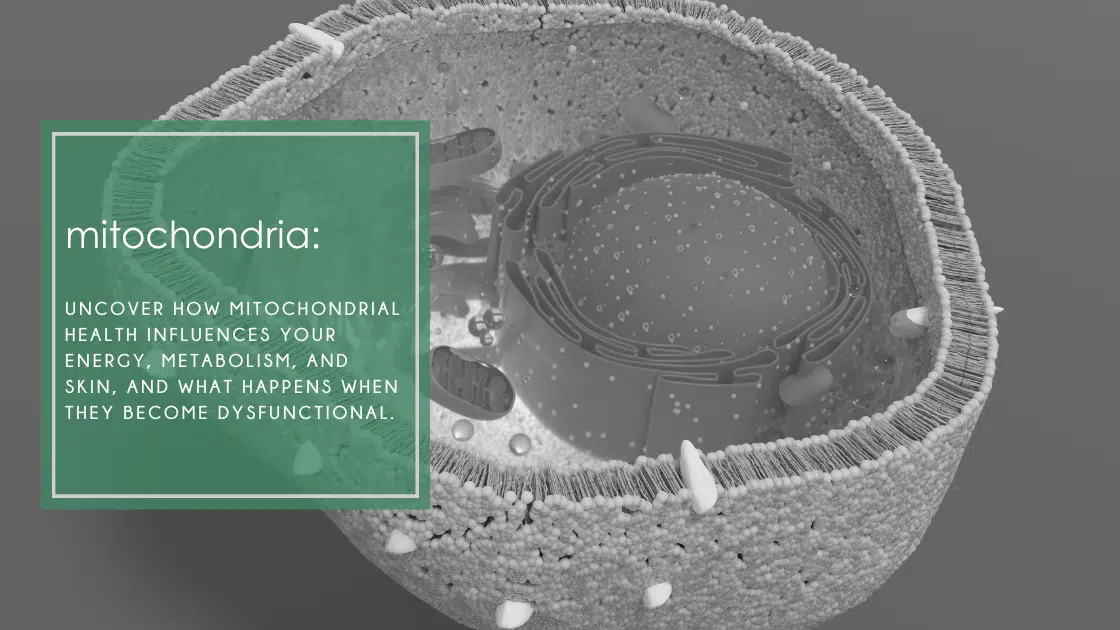
Mitochondria and Skin Health: Why Cellular Energy Matters
Mitochondria is a word we have been hearing more about, yet we know very little about. Probably because we had to memorize the parts of the cell in science class and unless you went into medicine or the medical field, this was something you may have forgotten about. Today we are going to talk about everything mitochondria; it’s functions, what it is, how it impacts your health and of course, your skin. Let’s dig in!
What are Mitochondria?
Mitochondria are organelles, (subunit of the cell that performs a specific function), that are responsible for cellular energy, and more affectionately referred to as the “powerhouse of the cell.” Basically, it is the cell’s battery, they convert nutrients into a substance called adenosine triphosphate, also known as ATP. They have their own DNA, and why they are known as the powerhouse of the cell.
What are the Primary Functions of Mitochondria?
Mitochondria create energy in the cells, crucial for the health of our body. Breaking down sugars, fat, and proteins creates energy. Oxygen supplies energy through our body. Mitochondria are involved in apoptosis or cell death. This is important because cells have a short life cycle and are constantly replacing themselves and occur in all organs of the body. If one system is out of balance, the rest of the systems in the body will shortly follow. Many of our illnesses and symptoms are a result of dysfunctioning mitochondria.
What is Mitochondrial Dysfunction?
Mitochondrial dysfunction is when the mitochondria fail to produce enough energy, leading to symptoms and illness. This is behind many of those “difficult to diagnose” symptoms in the brain, cardiovascular system, joint, and digestive diseases (to name a few). Some researchers suspect that certain medications, specifically antimicrobials may be the cause.
Insulin Resistance
Insulin resistance, linked to mitochondrial dysfunction. It is a common problem especially for women during perimenopause and menopause. This resistance happens when the body increases insulin production and begins storing sugar as fat in the body, leading to weight gain, brain fog, irritability, food cravings, and afternoon crashes. PubMed states, “Mitochondrial damage can lead to impaired insulin signaling. Canonical insulin signaling that promotes glucose uptake involves sequential activation of a phosphorylation cascade. This signaling initiates when insulin binds to its receptor, leading to the activation of several proteins, (proximal components of insulin signaling).”
Neurodegenerative Diseases
The increase in insulin due to mitochondrial dysfunction can alter brain energy metabolism. This is crucial in preventing neurological disorders. Studies are determining if this is the main cause or a side-effect producing consequences. Signal Transduction and Targeted Therapy says, “These metabolic changes are characterized by decreased glucose uptake, impaired tricarboxylic acid cycle function, deficiencies in oxidative phosphorylation, and reduced energetic support provided to neurons. These mitochondrial pathologies are prevalent across a range of neurodegenerative diseases such as Alzheimer’s disease, Parkinson’s disease, amyotrophic lateral sclerosis (ALS), Huntington’s disease, and frontotemporal dementia.”
Aging
Aging is the natural progress that happens over time, but does mitochondria play a role? Slowed energy transfer and oxidative stress are the key contributing factors. Oxidative stress from the environment, sun, and poor lifestyle contribute to aging, which we call extrinsic aging. It creates a substance called Reactive Oxygen Species, which are unstable free radicals that steal electrons that occur in the mitochondria. Signal Transduction and Targeted Therapy says, “The relationship between mitochondrial dysfunction and lifespan is complex, possibly subject to a phenotype threshold or point of irreversibility.”
Metabolic Syndrome
Metabolic syndrome has many different causes, and a variety of symptoms, such as cardiovascular issues, obesity, fatty liver, and insulin resistance. Mitochondria are present in the cell and can affect every organ of the body. When one organ is unbalanced, the rest of the systems follow. Metabolic syndrome is a result of multiple systems showing symptoms at once. Signal Transduction and Targeted Therapy says, “Mitochondrial impairments in key tissues such as adipose, skeletal muscle, and liver lead to systemic consequences, including insulin resistance and disrupted lipid homeostasis, which can manifest as components of metabolic syndrome.”
What are Symptoms to Look For?
Mitochondrial dysfunction’s impact on our health is due to mitochondria responsible for cell death, or apoptosis. Mitochondria basically clear out the waste when a cell dies. When unhealthy, this process becomes dysregulated and can’t regulate apoptosis which leads to less energy produced in the cells and body. Overtime, the result is a host of symptoms. Rupa Health says, “Mitochondrial dysfunction has been linked to various chronic conditions, including chronic fatigue syndrome and neurodegenerative diseases such as Alzheimer’s, Parkinson’s, and Huntington’s disease. Poor mitochondrial health has also been found to accelerate insulin resistance and the progression of metabolic syndrome due to the increased oxidative stress and inflammation that can build up when mitochondria are not performing well.”
Can Environmental Factors Trigger Mitochondrial Disease?
Mitochondria are susceptible to damage which is why they are behind many illnesses and symptoms. We have talked about oxidative stress and reactive oxygen species, which affect mitochondria the most because this process takes place in the core of the cell. Environmental toxins such as heavy metals, pesticides, and endocrine disruptors can cause the mitochondria to dysfunction. PubMed says, “Due to their susceptibility to damage, mitochondria are highly sensitive to environmental toxicants.” It is published in many studies that there are known toxins which contribute to mitochondria disease.
To keep this section short, we are going to categorize this into topics. All of the information is from the PubMed article, Environmental Chemical Exposures and Mitochondrial Dysfunction: a Review of Recent Literature, which you can click on to learn more.
Environmental Disruptors: Well documented for their effect on mitochondrial health. Environmental disruptors deplete the ability to produce energy and increase cell death. Some of the top disruptors are cyanide, rotenone (a pesticide), anti-HIV and anti-cancer drugs, and benzene (an industrial chemical). PubMed says, “Among all these classic mitochondrial disruptors, a common theme is disruption of energy production and oxidative stress.”
Air Pollution: The most studied of all toxins is air pollution because the quality does more than harm our lungs, it goes down to the mitochondria. Gases, chemicals, metals, and other particles categorized as air pollutants. Many of these can even affect babies in vitro. PubMed says, “Mitochondria are susceptible to air pollutants particularly due to their lack of repair capacity and their enhanced vulnerability to reactive oxygen species.”
Heavy Metals: The most harmful piece of heavy metals are the fact that our body stores them. Heavy metals are difficult to detox and build up in the cell membrane. PubMed says, “The mitochondrial membrane contains unsaturated lipids which enhance its susceptibility to metals, such as arsenic (As), compared to other organelles.”
Endocrine Disruptors: We are exposed frequently. Even those products claiming to be “clean,” often contain endocrine disrupting substances. An endocrine disruptor is a group of chemicals that mimic hormones, bind to hormone receptors, and alter detox pathways. PubMed says, “As Endocrine Disrupting Chemicals affect different cellular processes, including those related to energy production and utilization, it is thought that EDC disruption of energy homeostasis may be associated with mitochondrial dysfunction.”
Pesticides: Unfortunately, pesticides are everywhere. Pesticides control weeds for our crops, and exposure is in our food and ground water. This is why having a filtration system is crucial. Pesticides act as microbials in the body so they disrupt every system of the body, all the way down to the mitochondria. PubMed says, “Once in the mitochondria, both OP and OC pesticides have been shown to reduce the mitochondrial membrane potential, produce mtDNA damage, promote oxidative damage, and reduce mitochondrial ATP in cell lines and zebra fish.”
Mitochondria and Skin Health
We saved the best for last! Mitochondria affect the health of skin cells and support a healthy skin barrier. External factors affect the skin; weather, sun exposure, and environmental toxins. The mitochondria in the skin must be tougher and more resilient to withstand these factors. Mitochondria play a role in three main pieces of the skin; the keratinocytes, melanocytes, and fibroblasts.
Keratinocytes: Cells on the outside of our skin, the ones we can touch. Keratinocytes make up the skin barrier. Our cells are like a brick wall, stacked in layers with lipids to hold them in place. Mitochondria are important during this process because calcium signaling is another key component for keratinocytes. Keratinocytes start off alive and die as they rise to the skin’s surface. Without this, the health of our skin would become compromised, allowing moisture to escape and can prevent wound healing.
Melanocytes: Pigment cells that make up our skin’s color and act as a protective mechanism against UV rays. Mitochondria play a key role in the production of and how effective melanin protects against UV damage. Science Direct says, “Mitochondria also play a central role in maintaining redox balance within melanocytes, specifically the stress induced by UV radiation. Melanin functions as an inherent sunscreen, safeguarding the skin from additional exposure to UV-induced DNA damage.”
Fibroblasts: Deep in the skin and are responsible for collagen production so the skin can maintain its structure. Fibroblast cells require mitochondria to function because they require a lot of energy to maintain the skin’s structure. Certain amino acids are equally important for the health and function of collagen. Science Direct says, “Mitochondria are essential for the process of collagen synthesis and secretion as they provide ATP for these activities. They also exert a crucial function in collagen synthesis by facilitating the synthesis of essential amino acids, such proline and lysine, that are essential for the formation of the collagen triple helix structure.”
Mitochondrial Dysfunction and the Skin
Mitochondria are equally important for the health of our skin. If there is dysfunction in any of the cells, the skin will show it.If the mitochondria become damaged, it releases its mitochondrial DNA. Since it is a foreign substance, the immune cells act like it has a virus, which triggers inflammation. A compromised skin barrier slows wound healing and inflammatory skin conditions worsen.
Healing Mitochondria
Healing is possible with mitochondrial dysfunction. First of all, be kind to yourself, it has taken your body a long time to show symptoms and you have been ignoring signals and signs for months, if not years. Healing can take time, but the more equipped with the right way to heal, the more effective the outcome. Here are a few ways to support mitochondrial healing:
Hydrate: Drinking water is important, however, if you drink water and still feel thirsty, you are not absorbing water . Constantly going to the bathroom is not a sign of hydration. Plus, if you want to geek out a little bit, mitochondria benefit from the hydrogen portion of water.
Electrolytes: This is how to stay hydrated when you drink water. Water consumption doesn’t have to be excessive, especially if you aren’t absorbing water. I recommend electrolyte tablets, most electrolyte drinks are loaded with sugar.
Intermittent Fasting: Fasting is one of the best ways to improve mitochondrial health. When you fast, your body goes through a process called autophagy, which means it’s cleaning out waste, including damaged mitochondria. I recommend trying either a 24, 48, or 72 water fast.
Diet: Opt for more fatty red meats, healthy fat such as butter, avocados, beef tallow, or olive oil. Swap carbs for vegetables and eliminate inflammatory foods, like gluten, sugar, and soy. Eating this way reduces oxidative stress in the body and improves your immune system.
Exercise: Light movement is all you need. Over the years, I’ve found that walking or stretching is equally as important and better for my nervous system. Any type of movement increases blood flow, lymph, which increases oxygen flow through the body. Exercise stimulates muscles which pushes mitochondria through the muscles so we have the energy we need during our workouts.
Sleep: This is a big one, especially in midlife and beyond when sleep becomes difficult. When we don’t get enough sleep, toxins build up in our body and can damage our mitochondria.
Toxin Removal: This is something you should not jump right into because if your body is in a toxic state. Eliminating toxins without opening up your detox pathways, makes you very sick or feel horrible during the detox. The Keto Flu, for example, your body can’t detox because your pathways are blocked. Our bodies are bombarded with toxins and can’t detoxify. This is how our detox pathways become blocked. Doing the above things will help increase this process.
Supplementation: Many multivitamins or women’s health vitamins do not support your body’s detox pathways. Specific ingredients paired together, such as minerals, amino acids, detox and drainage support, and ones that promote optimal mitochondrial health. We do have a line of supplements that can help you achieve this goal. You may check out the mitochondrial support by clicking here.
Ready to Get Started?
We would love the opportunity to help you heal your body and skin from the inside out. Visit our website to shop supplements.