Is It Thyroid, Hormones, or Both? What Women 40+ Need to Know
Thyroid Symptoms in Women
Thyroid is often the missing piece in many symptoms, yet this master gland controls everything in our bodies. Today we are going to talk about the thyroid, what it is, symptoms of dysfunction, testing mistakes that most doctors miss, and how you can get the answers you need. Let’s dig in!
What is the Thyroid?
Your thyroid is a butterfly-shaped gland located in your neck that controls metabolism, hormones, heart rate, body temperature, growth and development. It produces two essential hormones, T3 and T4, that affect every organ, tissue, and cell in your body. The thyroid is stimulated by the pituitary gland, which sends a signal to produce and release these hormones.
Why Thyroid Problems are Often Missed in Women Over 40
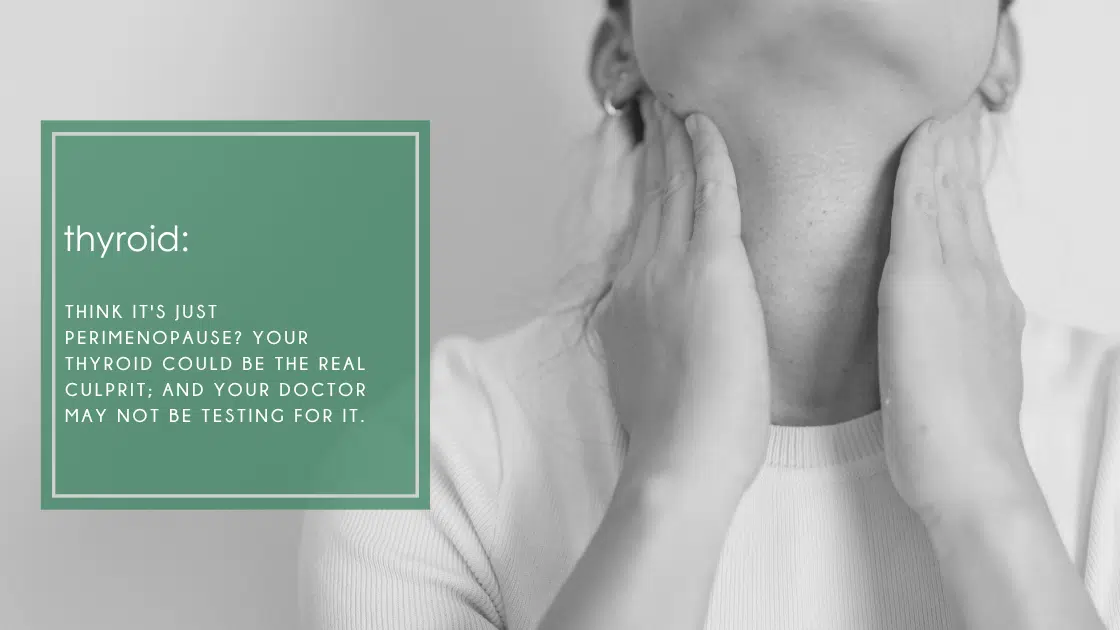
Thyroid symptoms are overlooked in most women because these symptoms are similar to perimenopause, menopause, and aging. Typical symptoms are brain fog, mood disorders, weight gain, and fatigue. Other symptoms such as blood pressure, cardiovascular, joint pain, bone loss, muscle weakness, neuropathy of the hands and feet, and digestive problems are also linked.
Every single woman over 40 should have a full thyroid panel, unfortunately, most doctors only check for TSH and maybe T3 and T4 and this is why symptoms go unnoticed or become masked by other menopause-related symptoms.
Is It Thyroid or Hormones?
When we think of hormones, we often think of sex hormones, but T3 and T4 are hormones produced by the thyroid gland. This is a grey area because as mentioned above, thyroid and perimenopause/menopause symptoms are similar and often get overlooked. During perimenopause, hormone levels fluctuate which means progesterone tends to decrease first, while estrogen may remain the same. This leads to estrogen dominance and directly affects your thyroid and can worsen your symptoms.
Perimenopause is the transition period leading up to menopause and the reason why women struggle during this time is because hormones fluctuate instead of just declining. This rise and fall of hormones is what triggers symptoms. Perimenopause can also trigger thyroid symptoms to begin. And this is why lab tests get overlooked, because symptoms are similar and conventional testing doesn’t show dysfunction. According to Dr. Raymond Douglas, “For many, hormonal changes during pregnancy, menopause, or stress can also trigger thyroid imbalances.”
Hyperthyroid vs. Hypothyroid
There is also the difference between hyperthyroidism and hypothyroidism which can show up as different symptoms. Let’s break each down and their symptoms.
Hyperthyroidism: This condition means the thyroid gland is producing too many thyroid hormones.
Symptoms of Hyperthyroidism
Cardiovascular – rapid heart beat, high blood pressure, and palpitations
Metabolic – rapid weight loss, no appetite, increased sweating
Gut – IBS-like symptoms, diarrhea, and bloating
Neurological – anxiety, irritability, and nervousness, brain fog, fatigue
Hypothyroidism: This condition is an underactive thyroid gland, meaning there is not enough hormone produced. Hypothyroidism is more common.
Symptoms of Hypothyroidism
Cardiovascular – slow heart rate, low blood pressure, and exercise intolerance
Metabolic – chronic fatigue, unexplained weight gain, increased heat or cold intolerance, slow metabolism
Gut – sluggish digestive system, constipation, feeling sluggish
Neurological – depression, memory problems
Body – muscle weakness, joint pain, achy feeling or moving joint pain, hair loss
What Standard Thyroid Testing Usually Checks
Standard blood work includes TSH and sometimes T3 and T4. This does not give a full picture of how the thyroid is functioning and if dysfunction is present. Running these tests only show brain signaling, not how the body is producing and using these hormones. In order to find dysfunction, you have to look beyond these tests.
Let’s break this down:
TSH: Thyroid Stimulating Hormone tells us if the pituitary gland is sending signals to the thyroid gland to produce hormones. While this number is important, this tells us very little about thyroid function. If this number is high, it means the pituitary gland is screaming at the thyroid gland to produce hormones and should be looked at further.
T4: Thyroxine is the primary hormone produced, and is an inactive form of thyroid hormone. Using the analogy of gasoline, T4 is like crude oil.
T3: Triiodothyronine is the primary active hormone that circulates through your body and is responsible for controlling metabolism, body temperature, and heart rate. Using the analogy of gasoline, T3 is the gasoline.
Root Causes of Thyroid Dysfunction Women over 40 Should ask About
First and foremost, all women should get a full thyroid panel done, including antibodies (which we will cover later on in this blog). Many women are silently suffering from Hashimoto’s, an autoimmune condition that attacks the thyroid gland. Not to mention the thyroid and sex hormones are linked so if one system is unbalanced, the other will follow. This is why most doctors mistake thyroid problems for perimenopause. Both seem to occur around the same time in a woman’s life. Women who are anemic, have low ferritin, or iodine levels are prone to thyroid problems.
Thyroid Antibodies and Hashimoto’s
Most people have heard of Hashimoto’s or Graves disease, which are both autoimmune conditions, but they don’t understand antibodies. These antibodies are proteins produced by your body that mistakenly attack the thyroid gland. Presence of these antibodies determines if you have either Hashimoto’s or Graves disease. Hashimoto’s is more common in women than Graves. When testing, you should have two types of antibodies run: Thyroid Peroxidase Antibodies (TPO) and Thyroglobulin Antibodies (TgAb).
Let’s break these down and how they relate to Hashimoto’s.
Thyroid Peroxidase Antibodies or the TPO Antibody test: These antibodies target a crucial enzyme that helps your thyroid make hormones and are the most common indicator of Hashimoto’s. Here’s something to make note of, ANY number over 0 indicates an autoimmune response, even if it is less than 1.
Thyroglobulin Antibodies or the TgAb Antibody test: These antibodies target thyroglobulin, a protein used to store and produce thyroid hormones. This can be elevated in both Hashimoto’s and Graves’ disease. Here’s something to make note of, ANY number over 0 indicates an autoimmune response, even if it is less than 1.
What is Hashimoto’s?
95% of women with hypothyroidism have Hashimoto’s, yet this is one of the most undiagnosed autoimmune disorders. Hashimoto’s is hard to catch unless you are looking early, because its symptoms develop gradually and can easily be mistaken for aging, stress, or hormonal changes. Dr. Amie Hormaman says, “Hashimoto’s doesn’t come with a warning label. It doesn’t scream. It sneaks in quietly at first blending into your daily exhaustion, your unexplained weight gain, your mood swings and bloating. Until one day, you realize you don’t recognize your energy, your body, or your brain anymore.” This is when women go to their doctor and get the labs that tell them “you’re just getting older” or “it’s perimenopause”, and my favorite, “you’re labs are normal, you’re fine”. No wonder why so many women are suffering during this stage of life. Our conventional doctors don’t even know what to test for or where to look. If you want to understand this further, we recommend checking out our recent blog about lab testing.
What Tests to Ask Your Doctor For
First of all, if you ask your doctor to run the full thyroid panel and they tell you they won’t, it’s time to find a new doctor. Period. At Skin Deep Esthetics + Wellness we understand that you need the full panel.
In addition to TSH, T3, and T4; here are additional labs to request for a full picture:
- Free T3
- Free T4
- Reverse T3
- Thyroxine Binding Globulin (TBG)
- Thyroid Peroxidase antibodies (TPO)
- Thyroglobulin antibodies (TgAb)
Free T3: The active form of thyroid hormone. This test measures the unbound form of T3 which is a direct measurement of hormone activity. This marker tells us if your body is actually converting T4 into T3 and is a better indicator of dysfunction.
Free T4: The unbound thyroid hormone in your blood that is converted into active T3. Free T4 affects your metabolism and shows if your thyroid is functioning as overactive (hyperthyroidism) or underactive (hypothyroidism).
Reverse T3: This inactive form of thyroid hormone, also called the anti-thyroid hormone. If elevated, it can indicate physiological stress, chronic illness, or elevates in response to the body trying to conserve resources, like in serious illnesses. Honestly, this should be the gold standard in testing, but most doctors overlook this crucial marker.
Thyroxine Binding Globulin (TBG): The primary protein in the blood that binds and transports thyroid hormones throughout the body. Increased TBG can indicate elevated estrogen levels. Decreased TBG can indicate high androgens or be affected by taking glucocorticoids.
When to Push for a Deeper Thyroid Evaluation
Always. You don’t want to accept a lab panel of TSH and maybe T3 and T4, you want the full picture. If you have a doctor who won’t run these labs, it’s time to find a doctor who will. Every woman over 40 is at risk of thyroid dysfunction or autoimmunity and needs the full panel run.
How Functional Medicine Approaches Thyroid Health
Functional medicine looks at the root cause of why your thyroid is dysfunctional. We start with a full lab panel that includes thyroid, hormone, metabolic, cardiovascular, a full iron panel, and gut testing. Once we have a complete picture of how your thyroid is functioning and if you are showing antibodies, we can then start to treat you. Thyroid and hormone replacement is beneficial and can be matched to your labs + symptoms and regular check ins to how you’re improving is key. We also adjust your diet with our customized nutrition plans, lifestyle changes, and supplementation if needed. Dr. Amie explains it, “A conventional endocrinologist typically treats to lab reference ranges using TSH as the primary marker and prescribes T4-only medication like Synthroid. A functional medicine thyroid specialist evaluates the full conversion pathway, considers symptoms alongside labs, and personalizes treatment — which may include T3 medication, hormone replacement, and targeted supplementation — based on how you actually feel, not just where your numbers land.”
If you’re reading this and wanting a different approach to your thyroid, we are happy to help. Click the link to book your appointment today. You deserve to feel better at every stage of life and if you have a doctor who isn’t running the correct labs or dismissing you, then it’s time to find someone who will listen to you, understand you’re not crazy, and dig deeper to find the root cause.