Functional Medicine
Functional Medicine: What It Is, Why It Works, and Why Your Body Has Been Trying to Tell You Something
Functional medicine is becoming a term that more people are familiar with. Yet so many don’t understand what functional medicine is. Today we are going to talk about what functional medicine is, the difference between functional and conventional medicine, principles, testing, treatment, and the process of working with a functional medicine doctor.
What is Functional Medicine?
Functional medicine is a science-based approach that focuses on the root causes of symptoms and illness, rather than just treating symptoms with medications. Functional medicine looks at the body as a whole and understands that all systems of the body are connected. When one system is off, the rest of the body follows. Healing includes personalized nutrition plans, lifestyle guidance, functional lab testing, and supplementation.
Is a Functional Medicine Doctor a Real Doctor?
Yes. Some functional medicine doctors are MDs, DOs, or nurse practitioners. They go on to study functional medicine. Functional medicine doctors earn a doctorate in functional medicine and carry either a holistic health license or board certification.
The real difference is a traditional functional medicine doctor cannot prescribe medications, but a conventional doctor can. Be careful when selecting a functional medicine doctor, some doctors are able to take a weekend class to certify in functional medicine. They learn about the basics of what functional medicine is, yet they treat their patients like medical patients by prescribing multiple supplements instead of medications. They don’t always tie in the nutrition or lifestyle piece. This is where you need to make sure to do your research first. Because supplements alone cannot heal your body, however, they are designed to help support your body while it heals.
What is the Difference Between a Functional and Conventional Doctor?
Conventional doctors attend medical school and do a residency in their area of expertise. They are trained to treat symptoms, run blood labs, and prescribe medication. Their goal is to treat and manage symptoms. This is why your doctor may tell you that you look fine based on your labs, because that is how they are taught to treat symptoms.
Functional medicine doctors attend holistic education that includes doing various case studies in the area of interest. Functional medicine looks at root causes, for example, the WHY behind your symptoms. The goal is to educate you to understand why you have that symptom, what system of the body is off, how to incorporate a healthy lifestyle to heal your body. But the most important piece is teaching you how to pay attention to your body, listen to its signals and signs, and understand how to self-heal.
Core Principles of Functional Medicine
There are several core principles of functional medicine that we are going to cover in depth.
Body is Self-Healing: We must remember that our bodies have the ability to heal themselves. Our bodies are made with an intelligence that can heal when given the right environment and opportunity.
Every Cell is Connected: Disease starts at the cellular level and functional medicine doctors understand this. The American Academy of Functional Medicine defines it, “Functional Medicine recognizes that every cell in the body affects every other cell. Recognizing the body as a holistic organism, in which all systems and functions of the body influence and are influenced by one another.”
Prevention-Focused: Functional medicine doctors focus on preventing illness and disease or slowing down the progression of symptoms to prevent future illness. This is done through education, testing, and lifestyle management.
Example of Health: Many functional medicine doctors walk the walk. Many started in this field because of their own health journey and have done the work on themselves so they can help their patients. They strive to live optimally and keep themselves in the best health possible. I know for me, running frequent labs on myself, opting for proper nutrition, and working on regulating stress and cortisol are the priorities in my life so I can manage my own stress and perimenopause symptoms. This helps me understand where my clients are and go through this with them.
Natural First: While some illnesses and symptoms require you seek medical attention and take prescription medications. Our goal is to help you heal your body and work with your physician to feel your best and get to the root cause of your symptoms.
6 Pillars of Functional Medicine
The pillars of functional medicine are designed to teach your body to heal. These were originally based on healing diseases such as cardiovascular disease, diabetes, and obesity, but can be applied to any symptom or disease. PubMed explains it as, “These pillars define a relatively new branch of medicine, Lifestyle Medicine, which is acting in the field of prevention. They comprise nutrition, physical activity, sleep, stress management, avoidance of risky substances and social connection.”
What Are the 5 R’s of Healing?
The gut is the basis of most diseases and where we start with all our clients. When you heal your gut, many of your other symptoms lessen or are easier to manage. This is the approach we use in functional medicine when healing the gut. The 5 Rs include: Remove, Replace, Reinoculate, Repair, and Rebalance.
- Remove: We remove inflammatory foods, such as gluten, dairy, prepackaged and processed foods. You want to avoid foods that have the potential to cause inflammation.
- Replace: We replace foods that have been removed with foods that your body can tolerate to support digestion. We love protein rich meals that incorporate fat and vegetables. Always choose whole foods and avoid any starchy fruits or vegetables.
- Reinoculate: We add in probiotic-rich foods, like sauerkraut or kimchi, only if your body can tolerate it. As we reintroduce foods, if anything causes gas, belching, or bloating, that is your body saying you need to avoid it! This step focuses on improving your gut microbiome.
- Repair: We repair the gut lining from leaky gut. This is done through nutrition, lifestyle, and supplementation that focuses on gut repair.
- Rebalance: We work with both your gut and your nervous system because if your body is in a stressed state, the gut can’t heal. Deep breathing, light exercise, and meditation are great ways to destress so your gut and body can heal.
Why Should I See a Functional Medicine Doctor?
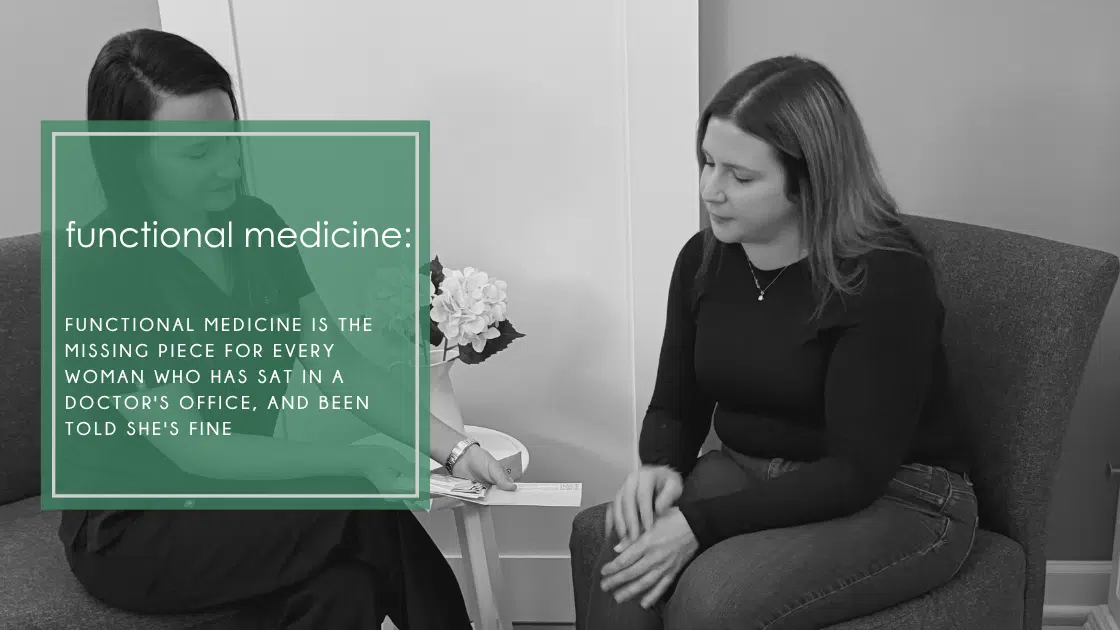
We work with a lot of women and the biggest piece that comes up for most of our clients is the woman who is struggling with perimenopause, thyroid concerns, fatigue, or not feeling like her best self anymore. She visits her doctor, gets lab work done, but nothing comes up. Her doctor tells her she’s fine, it’s all in her head, and to come back when she feels worse. These women leave feeling dismissed, unheard, and unsure of what to do. They are struggling inside and feel like they have no options.
This is when working with a functional medicine doctor will ease up your frustration. We spend a lot of time with you, understand where you are and what your health goals are. Next, extensive blood work is ordered, that includes blood, metabolic, glucose, and thyroid panels. Pairing this with functional testing gives us a full picture as to why you are experiencing symptoms.
We work together for several months and this includes a customized nutrition plan, lifestyle recommendations to help calm the nervous system, destress, and reduce cortisol levels, and supplementation recommendations. Every week we check in and every month we meet either in person or via telehealth to set new goals, check in on your progress, and adjust as needed. During this time we focus on educating you on your body, how to listen to your body’s needs, understand why it might have been feeling off, and how you can adjust yourself. We are your guide, it’s up to you to do the work and learn your body’s specific needs.
Functional Testing
Functional testing is different from blood labs because your blood work is a snapshot of what your body is doing at that particular moment. This type of testing gives us a better understanding of why your body is responding or reacting. We pair our functional tests with bloodwork because we want to look for underlying markers and refer you to a physician if needed. Here are some of the different types of testing we offer:
Gut Test: Almost all health concerns stem from the gut. This is the functional test we start with. This gives us answers to most of the digestive, skin, neurological, and hormonal concerns our clients face.
Hormone Testing: Our hormone test is a urine and saliva test that goes beyond the hormonal level itself into metabolites, cortisol, endocrine disrupting chemicals, and more. This is where we understand what is causing your hormonal imbalances.
Heavy Metals/Mold/Toxic Panels: We live in an environment where we are exposed to toxins daily. This test looks for markers of toxic exposure and oxidative stress. We may pair this test with your gut test if we suspect mold or toxic exposure.
Food Sensitivity Testing: This test checks for sensitivity to the most commonly eaten foods and does three types of inflammatory markers of food sensitivity and food allergens. We typically run this test with autoimmune disease because food sensitivity and leaky gut are the basis of most autoimmune diseases. We run this test to know what foods your body is able to tolerate.
Organic Acids: This checks metabolic function, nutrient absorption, and methylation pathways. This test is paired with other tests to check for detoxification, neurotransmitters, and intestinal microbial activity.
Treatment Plans
Once we get your lab results back, we understand how your body can begin to heal. We offer 3 and 6 month programs depending on your level of inflammation is and how long to start healing. We determine this timeline when we see your blood and functional lab work. Our plans include customized nutrition, lifestyle changes, and supplementation to support your body while it heals. We start out with an extensive consultation to understand where you are, your struggles, what has worked and what hasn’t worked.
Then we order labs and once we receive the lab work, we review your labs and create your plan. Once we have a plan in place, we schedule our first meeting. This is our first meeting in your 3 or 6 month program. We explain labs, nutrition, lifestyle changes, and supplementation so you can begin your healing journey. We have weekly check-ins and monthly meetings to see how you are feeling, adjust plans as needed, and make sure you are on the path to healing. At the end of the program, we follow up and talk about next steps. We are taking new clients and if you are ready to begin the path to healing, we would love the opportunity to help. We offer both in person and telehealth appointments. Click here to get started.
Ready to Get Started?
If you like what you read and are ready to take the next step, visit our website. Questions? Comment below or give us a call, we are happy to answer any questions that come up for you today.
Always remember, you deserve to love the skin you’re in!