Perimenopause and Cortisol
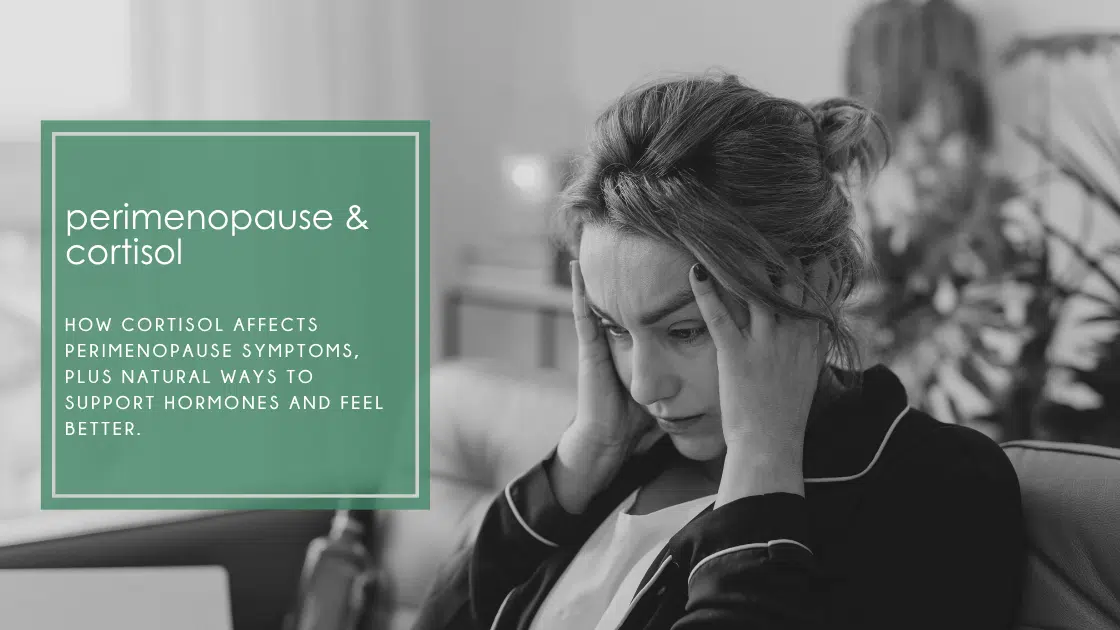
Perimenopause and Cortisol: Why You Can’t Sleep, Can’t Lose Weight, and Feel Wired at Night
Cortisol is becoming more talked about during perimenopause, because this is the time in a woman’s life when she begins to pay attention. Our bodies need cortisol, but when dealing with high levels of stress over many years, we begin to feel it when our body goes through a hormonal shift. While more information is starting to come out, we still have a long way to go to educate women. Today’s blog is going to focus on the key questions and pain points women ask during perimenopause.
What is Cortisol?
Cortisol is a hormone produced by the adrenal glands that manages our stress levels, regulates metabolism, immunity, and blood pressure. Cortisol is the hormone responsible for our “fight or flight” reaction, it increases and gives our body the ability to be able to run from danger. It’s what wakes us up in the morning and gives us the energy we need throughout the day.
Does Perimenopause Make Cortisol Levels Higher or Lower?
Yes, perimenopause can raise cortisol levels. When perimenopause starts, progesterone and estrogen levels begin to decline. This decline increases how your body responds to stress. While most women have been dealing with stress since their 20s, your stress response becomes difficult when your hormones begin to shift. PubMed says, “Evidence suggests that the natural menopausal transition is associated with an increase in cortisol levels during the late perimenopause and that this may not reflect response to stressors but a biological feature intrinsic to the menopausal transition.”
Can Cortisol Cause Weight Gain in Perimenopause, Especially Belly Fat?
Yes, perimenopause triggers hormonal fluctuations in the body. Estrogen and progesterone begin to decline. The key factor here is estrogen, because when estrogen levels fall, fat storage increases. There are other factors that influence fat storage, such as your body becoming more stressed, cortisol levels, and insulin resistance increasing. These are the driving forces behind fat storage. When insulin and cortisol increase and estrogen and progesterone decrease, the result is excess fat in the belly.
What Helps or Hurts Cortisol?
What you eat during this stage is important. Insulin resistance increases, so the goal is to manage insulin and cortisol levels. Start by avoiding anything prepackaged or processed, sugary foods and drinks, and seed oils. Switch to whole foods and swap your carbs for vegetables.
Here’s our recommendations:
Protein
Increase the amount of animal protein daily. Women need to consume about 80-110 grams per day for a 150lb woman. Dr. Mindy Pelz says, “Protein is also deeply satiating and plays a critical role in long-term weight loss, metabolic health, and hormone balance. Most people would feel significantly better eating within this new range.” This does not mean to run out and add protein to your sugary coffee or sprinkle protein powder in everything you drink. Animal protein is the best source especially for women.
Fat
Women need fat in our diets and contrary to popular belief, eating healthy fats does not automatically lead to weight gain. Make sure to avoid any seed oils as those can be harmful and increase insulin resistance. The best fats are butter or ghee, olive or avocado oils, MCT oils, coconut oil, and beef tallow. There is a difference between saturated fat and polyunsaturated fat. Saturated fat is needed for our body and our body can break this down and utilize it. Women need extra fat for our cycles, especially during perimenopause because fat increases hormone metabolism.
Carbohydrates
Skip all carbs during this stage and instead switch to vegetables. Insulin and cortisol are why your body craves carbs, switching to vegetables will satisfy this craving. Our body breaks down carbohydrates into sugar and during perimenopause, you want to avoid anything that can turn into sugar to keep insulin resistance down. Your body may crave carbs at first because it’s needing that sugar, but the goal is to get your body into fat burning mode and swapping vegetables for carbohydrates can help your body make that switch.
Drinks
Avoid or limit your amount of alcohol consumption. Not only does alcohol contain sugar, but it can prevent you from sleeping well which raises cortisol. Many women during perimenopause become alcohol resistant and this is normal and caused by sluggish liver and kidney filtration along with a changing gut microbiome. Limit caffeinated drinks which can disrupt sleep. Opt for water. Add lemons, limes, or cucumbers for flavor.
Supplements
Supplements should be used with caution during perimenopause. Many women take a variety of different ones because there are plenty of influencers telling you what’s best for your health. While I do like supplementation, I recommend it to support your body while it heals. Real health benefits come from eating whole foods. Plus many of the over-the-counter supplements have little to no nutritional benefit to your body and many women can’t even absorb supplements.
Does Exercise Raise Cortisol? What Workouts are Best for Perimenopausal Women?
Certain types of exercise can raise cortisol. HIIT workouts, running, intense cardio workouts, and heavy weight lifting put stress on the body and increase cortisol. These types of workouts are not recommended for women during perimenopause. When your hormones begin to shift and cortisol levels become difficult to manage, easy workouts are best. Think movement, like walking, stretching, pilates, or yoga. These are gentle on your nervous system and keep your body moving. We think that the harder the workout the more calories you burn, but during perimenopause, that calories in, calories out theory no longer works because your body is naturally changing. Our workouts need to shift too. The goal is to move your body: walk, stretch or do yoga to increase blood flow, increase your heart rate, and keep your muscles moving.
Why Do I Feel “Tired but Wired” During Perimenopause?
When progesterone levels decline, cortisol increases and prevents your body from handling stress like it used to. Increased cortisol is responsible for sleep struggles during perimenopause and this leads to that tired but wired feeling. Even if you do sleep, many women don’t wake up feeling rested. Chronic stress is the silent partner behind sleepless nights, hot flashes or night sweats, mood swings, and fatigue. We immediately blame our hormones but cortisol is often the hidden factor.
What Immediate Steps Calm Cortisol and Help me Sleep Tonight?
The goal is to create a habit that calms your body before bed. Women are used to going nonstop and when a hormonal shift occurs, this leaves your body struggling to wind down and rest. The reason women struggle with sleep are two things: 1) Cortisol peaks at night instead of dropping; 2) Blood sugar spikes occur in the middle of the night and wake you up at 3am.
Here are a few key things you can incorporate into your nighttime routine to help you wind down and sleep better:
Create a Nighttime Routine: Turn off your phone or device an hour before bed, play calming music as you shower and get ready for bed, light a candle, take a bath, or meditate. These are great ways to relax your nervous system and let your body know it’s time for rest.
Breathe: There are two techniques that relax your body. Deep breathing, also known as Box Breathing, inhale through your nose for 4 counts, hold for 7 counts, and exhale out your mouth for 8 counts. Do this 5-10 times in a row when you lay down in bed to activate your parasympathetic nervous system and help you fall asleep and rest. Breathwork uses your breath in a series of activation breaths along with holding your breath. This technique releases tension, energy, and emotions from your body so you can rest at night. If you’ve never heard of breathwork, here is a great video that you can follow along with.
Are Adaptogens Safe and Effective for Lowering Cortisol in Perimenopause?
Yes, adaptogens are great to take daily. If you’ve never heard of an adaptogen, they have the ability to help the body to resist, adapt, or become resilient. The most commonly used adaptogens are ashwagandha and rhodiola. Ashwagandha may interact with certain medications, so check with your doctor before starting. Rhodiola has been tested and proven for its efficacy. PubMed says, “The natural adaptogens have the ability to increase the body’s resistance to stress changes caused by different types of stressors.”
How Can I Test my Cortisol and Which Test is Best for Perimenopause?
Testing cortisol requires a urine and saliva test. We use the Hormone Zoomer test, which checks for cortisol and cortisol metabolism, how your cortisol rises and falls throughout the day, and your Cortisol Awakening Response (CAR). CAR is a real time cortisol and adrenal health test done throughout your day. CAR is a key component in the circadian rhythm. Alongside cortisol, we look at hormone levels and hormone metabolites, melatonin, endocrine disruptors, and bone density. This helps us understand what areas need the most attention.
When Should I see a Doctor and Could Hormone Therapy Help Cortisol-related Symptoms?
Seeing your doctor is always recommended. However, many doctors will run blood tests to check hormone levels. This doesn’t always give you a complete picture as to what may be causing your symptoms. If you are looking into hormone replacement, ask your doctor to do a full hormone and cortisol test, along with a full thyroid panel to look for any markers of inflammation or autoimmunity that may be underlying and causing your symptoms.
HRT is great for women suffering with perimenopause, however, if your doctor won’t run all these tests, find a specialist to run them. Getting hormone levels right can be tricky and seeing an expert in this area gives you a better outcome. There are a lot of factors that play into hormone replacement and making sure you work with someone who is trained in this is important. Many OBs understand HRT but don’t specialize in it, this may not be your best option.
Ready to Get Started?
If this is something you are looking for better answers, we would love to work with you. We work with women, just like you, who are in this space and aren’t sure what to do about it. You can book a discovery call or consultation online. We offer both in person and telehealth appointments so you don’t have to leave your house. If you have questions, either drop it below or reach out to us via phone or email.