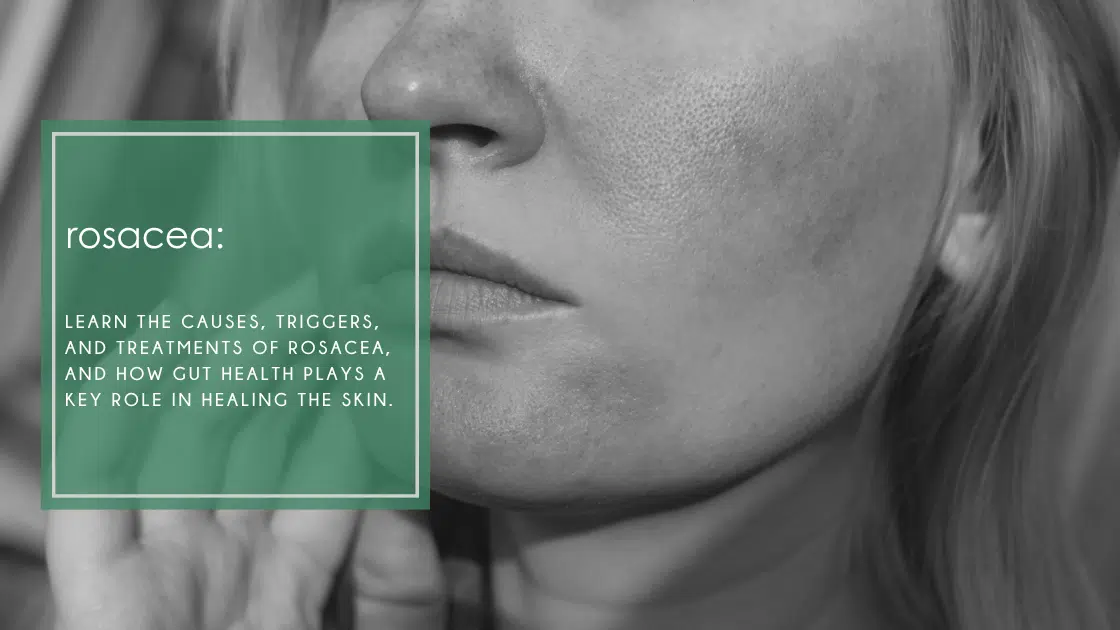
Rosacea Isn’t a Skin Problem, It’s a Gut Problem
Rosacea is More Than Skin Deep, and Your Gut May be the Missing Piece
April is Rosacea Awareness Month, and to celebrate, we are dedicating this week’s blog to a skin condition that millions suffer from. Despite its commonality, treatment from estheticians and dermatologists are still not able to properly address this skin condition. Today we are going to talk about what rosacea is, how it’s treated, and then dig into root causes and how to heal your skin from the inside out.
What is Rosacea?
Rosacea is a chronic inflammatory skin condition that shows up as facial redness, red acne-like bumps, or flushing around the cheeks, nose, and forehead areas of the face.
What are the Main Causes?
The causes of rosacea are unknown, but speculations range from topical to internal. According to the National Rosacea Society, “Although the cause of rosacea remains unknown, researchers have now identified major elements of the disease process that may lead to significant advances in its treatment. Recent studies have shown that the facial redness is likely to be the start of an inflammatory continuum initiated by a combination of neurovascular dysregulation and the innate immune system.”
What is the Biggest Trigger?
Sun exposure is claimed to be the number one trigger. Other common triggers include: extreme hot and cold temperatures, spicy foods, alcohol, stress, and certain skincare or beauty products. There are also numerous studies being done to make the connection between gut and skin health and rosacea. The National Rosacea Society says, “An unclassified Corynebacterium and members of the family Micrococcaceae on the skin, as well as groups of gut bacteria from the class Clostridia and Deltaproteobacteria, order Clostridiales and Desulfovibrionales and genus Odoribacter, were associated with rosacea.”
Rosacea Symptoms
Rosacea presents as various forms of redness in the skin. The most common association is red patches that look like flushing or acne-like bumps.
Here are the most common symptoms:
Flushing: Skin may appear similar to after a workout or when embarrassed, but rosacea skin tends to feel warm or pinchy.
Acne-Like Bumps: Many confuse rosacea with acne. Rosacea forms on the cheeks, nose, and forehead area and can show up like little red acne bumps or pustules. The difference is the skin lacks blackheads and similar to flushing the skin may feel more sensitive.
Broken Capillaries: Visible blood vessels (or spider veins) may be present. As aging occurs, these blood vessels can become enlarged or darker in color.
Dry Skin: Areas of inflammation may develop dry or flaky skin that may not be visible on the rest of the face. The skin has a raw sensation due to the compromised skin barrier.
Rosacea Treatments
Rosacea can be treated by either an esthetician or dermatologist, however, estheticians cannot diagnose this condition. Dermatologists typically prescribe topicals such as Azelaic Acid, Metro Gel, or Ivermectin, and in more advanced cases oral antibiotics, to reduce inflammation. Laser treatments are recommended to decrease the appearance of broken capillaries, although multiple sessions are usually required and results may not be permanent.
Estheticians can perform gentle facials that include a light enzyme exfoliant, calming and soothing serums to combat redness, and cooling facial masks. Some light peels may be used depending on the client’s skin sensitivity level and peel type. Red Light Therapy is an effective option to help calm and soothe broken capillaries.
What Foods to Avoid When Diagnosed?
Shifting gears into the internal part of rosacea, by starting with foods that trigger an inflammatory response. I mentioned earlier that spicy foods and alcohol should be avoided. There are other ingredients that trigger an inflammatory response in the skin, such as cinnamon, chocolate, tomatoes, and citrus fruits. These foods are classified as cinnamaldehyde-releasing foods. Cinnamaldehyde is a compound found in these foods that are both antibacterial and anti-inflammatory, however, in those with rosacea, it can trigger an inflammatory response in the skin after consuming.
Is Rosacea Caused from a Gut Imbalance?
Yes. I have talked in several other blog posts about the gut-skin-axis which is a bidirectional pathway linking the gut and skin. Earlier we mentioned a link to rosacea via the neurovascular and immune systems. PubMed says, “A growing body of evidence indicates a higher prevalence of gastrointestinal (GI) disorders, such as small intestinal bacterial overgrowth (SIBO), Helicobacter pylori (HP) infection, coeliac disease, Crohn’s disease and ulcerative colitis among patients with rosacea, suggesting a systemic inflammatory basis for the disease. These findings suggest that GI diseases that compromise the integrity of the mucosal surfaces may contribute to the leaky gut phenomenon, exacerbate systemic inflammation and trigger rosacea symptoms.”
Immune Response: Happens because of an immune response in both the skin and gut. Inflammation in the gut from food, dysbiosis, IBS, or SIBO activates immune cells in the skin which results in a skin flare up.
Neurovascular Response: Happens when an increase in blood flow triggers the skin to react. This is why the skin feels warm or pinchy with a flare up. Frontiers in Microbiology explain, “Angiogenesis, persistent vascular and lymphatic dilation, and increased vascular permeability are also involved in the pathophysiology of rosacea.”
Rosacea and SIBO
SIBO, Small Intestinal Bacterial Overgrowth, is a disorder of the small intestine which results in an overgrowth of bacteria that causes bloating, gas, abdominal pain, diarrhea, and nutrient deficiencies. Studies have been done linking rosacea to SIBO. The Journal of the American Academy of Dermatology says, “Patients with rosacea were 13 times more likely to have SIBO compared with controls. SIBO is determinant in maintaining inflammation in rosacea and may have a relevant pathogenic role.”
H. Pylori and Rosacea
H. Pylori, Helicobacter pylori, a bacterial infection that can cause stomach pain, loss of appetite, bloating, frequent burping, or weight loss. Multiple studies have been done on this connection, however, the results are inconclusive. PubMed says, “It seems like H. pylori is an aggravating factor rather than a cause.” Regardless, if you have H. pylori and rosacea, I do recommend treating the gut for this to help reduce skin flare ups. A functional gut test shows H. pylori in the gut and there are ways to reduce this bacteria without medication.
Can Healing the Gut Help?
Yes. The gut is tied to every organ in our body. The goal is to maintain homeostasis and it all starts with the gut. The reason why we see flare ups is because the gut becomes inflamed. It can be from foods, inflammation, leaky gut, IBS, or dysbiosis. But many times it starts with constipation. When you get constipated, your body stops eliminating food, hormones, and toxins. When this occurs on a regular basis, your drainage pathways become blocked. Toxins must be released from the body and if they can’t go out the bowels, it moves to the skin. The skin is the next line of detoxification. Once we see inflammation showing up in the skin, that is your first signal to address your gut.
If left untreated, this can lead to disease and worsen your symptoms. I like to call this a whisper. Your body is telling you there’s a problem inside and it’s quietly asking you to fix it. If you ignore this by throwing skincare or topicals at your skin, that whisper is going to turn into a scream. Which will become harder to treat.
Is Rosacea Linked to Autoimmune Diseases?
Studies are inconclusive on this, however, it is common for someone with an autoimmune disease to also have rosacea or any type of inflammatory response on the skin. Autoimmunity is a condition where the body attacks its own healthy cells, tissues, and organs causing damage and chronic inflammation. When there is an inflammatory response, the skin will show it. Many people who suffer from autoimmune disease tend to have gut dysbiosis, leaky gut, and food sensitivities. It makes sense that they would also have skin flare ups. The National Rosacea Society says, “There could be a positive association between certain subtypes of rosacea and certain autoimmune diseases, but not necessarily an association between each subtype of rosacea, they said. They added that further research is needed to determine the nature of the relationship between rosacea and autoimmune diseases.”
Natural Treatments
The best way to address rosacea is starting with internal factors, such as doing a functional gut test to understand what is causing the inflammation, such as gut dysbiosis, leaky gut, parasites, or is it that your bacteria levels or candida are off? There are many varying factors that contribute to gut issues. Doing a functional gut test is a great starting point. From there, we can address nutrition and lifestyle to help your gut heal. Our 6-month functional medicine program is a great starting point and we address both internal and topical concerns while your body works to heal from the inside out.
Topical treatments include gentle, hydrating, calming facials that use hyaluronic acid and honey to calm and soothe the skin. Red light therapy is a great treatment to help relax visible capillaries. Our microcurrent treatment is a great anti-aging treatment but also works to calm skin inflammation. As far as skincare goes, we like to keep it simple:
- Cream or oil-based cleanser
- Weekly gommage exfoliation
- Hyaluronic acid use in the morning
- Bakuchiol serum usage at night
- Moisturizer
- If your skin is really dry, we love the calming facial oil to fight topical redness
Ready to Get Started?
We would love the opportunity to help you heal your rosacea from the inside out. Please visit our website to book your first appointment today.