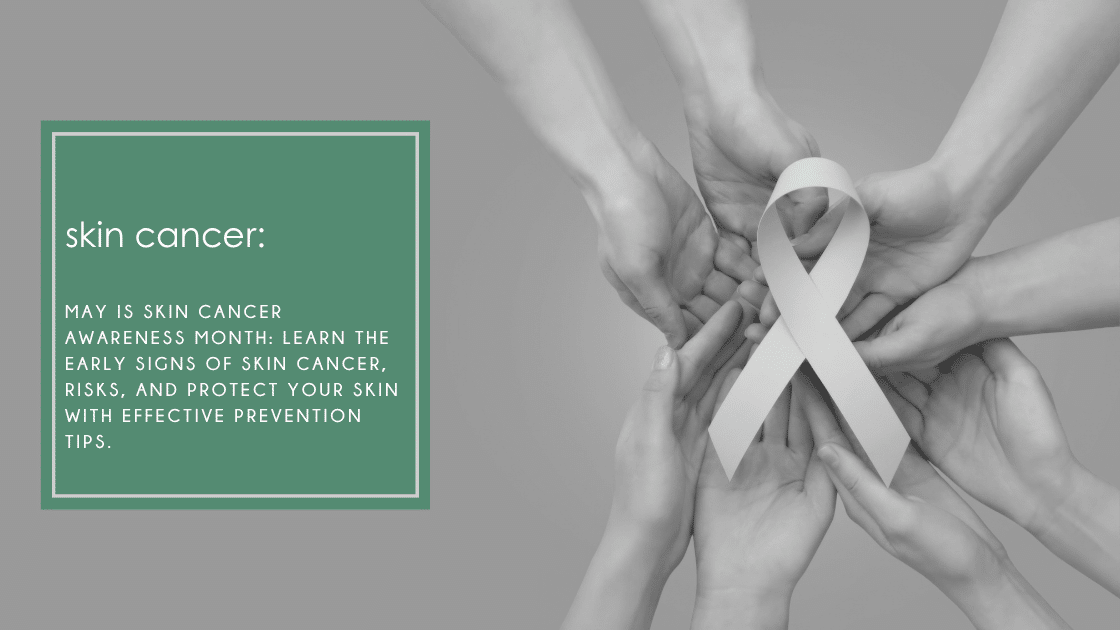
Skin Cancer Awareness
Skin Cancer Awareness Month
To honor Skin Cancer Awareness Month, we’re diving into everything you need to know about skin cancer prevention, early detection, melanoma, sunscreen safety, and the controversial question: Does sunscreen cause skin cancer? Let’s break it all down so you can protect your skin with confidence.
What is Skin Cancer Awareness Month?
May is skin cancer awareness month. According to the Skin Cancer Foundation, “With over 5 million cases diagnosed in the United States each year, skin cancer is America’s most common cancer. Fortunately, skin cancer is also one of the most preventable cancers.” It seems that skin cancer is becoming more common. When I think about it, I always go back to the question, ‘Why?’ I grew up in the 80s and 90s and sunscreen really wasn’t a thing, but skin cancer also wasn’t at the forefront of skin problems either. So while today’s blog is going to talk about prevention, we are also digging into finding out why there are so many more cases of skin cancer.
What is Skin Cancer?
Skin cancer is the growth of abnormal cells. These cells were either normal cells or started growing inside normal cells into a mass that forms a tumor. These tumors can be either benign (non-cancerous) or malignant (cancerous). According to the Skin Cancer Foundation, “The two main causes of skin cancer are the sun’s harmful ultraviolet (UV) rays and using UV tanning beds.”
What are the Early Signs of Skin Cancer?
Early detection is the best way to prevent or minimize cancer in your skin. Some things to pay attention to are any new or changing spots, moles, or freckles, sores that seem irritated or don’t heal, and rough or scaly persistent patches. If anything seems abnormal, the best thing you can do is schedule an appointment with your dermatologist to get it checked out.
What Does Skin Cancer Look Like?
The most common types are Basal Cell Carcinoma, Squamous Cell Carcinoma, and Melanoma. Let’s break these down before we get to the ABCs of skin cancer.
Basal Cell Carcinoma: The most common type of skin cancer is defined by small moles or bumps typically in sun exposed areas like on the face, neck, or head. These might be a sore that never seems to heal, a rough or dry patch, or a pearly/waxy bump.
Squamous Cell Carcinoma: These are red bumps that can appear dry or rough. This type may also resemble a wart, sometimes scaly or crusted. This type can grow deeper into the skin if left untreated.
Melanoma: The deadliest form, is typically discolored, abnormal shaped, or quickly appears and grows. The best way to detect melanoma is the ABCDEs as defined by the CDC.
Use the ABCDE rule for melanoma detection:
- Asymmetrical: Does the mole or spot have an irregular shape with two parts that look very different?
- Border: Is the border irregular or jagged?
- Color: Is the color uneven?
- Diameter: Is the mole or spot larger than the size of a pea?
- Evolving: Has the mole or spot changed during the past few weeks or months?
How Can I Reduce My Risk of Skin Cancer?
Prevention is key. However, many of us, especially if we are older than 40, grew up in the era of either not wearing sunscreen or we coated ourselves in baby oil and iodine and sat with aluminum foil to bake ourselves to a crisp. That age group is the most prone to skin cancer and should get regularly checked.
Here are proven ways to reduce the risk:
- Avoid direct sun between 10am – 4pm which are peak hours. If you cannot avoid the sun, apply sunscreen and wear a hat to prevent a sunburn.
- Only apply a physical sunscreen, such as zinc oxide or titanium dioxide. Avoid chemical sunscreens, especially the spray ones, which are damaging to your skin and contain endocrine disrupting chemicals.
- Avoid tanning beds which contain UV rays and are known to cause skin damage which can lead to skin cancer.
- Get checked regularly by your dermatologist. If you have a history of skin cancer, every 6 months is recommended, otherwise yearly check ups are best.
Sun Exposure vs. Sun Burns
This is where more education needs to come in because there is a big difference between sun exposure and sun burns.
Sun Exposure
Our skin needs sun exposure and this is where many people get it wrong because we feel that the sun is damaging and harmful to our skin, yet thousands of years ago, UV-related cancers weren’t a thing. Yet, years ago many workers carried out their daily tasks outside (without sunscreen), and no mention of skin cancer has been reported. So is the sun really that bad? I believe it isn’t. However, I do believe, and this is my personal opinion, our gut health and environment contribute to sunburns, not the fact of wearing sunscreen or not. The true issue is overexposure and imbalance.
Sun Burns
Sunburns are bad. Period. When you get sunburnt, you have damaged your skin. That inflammation that you see after too much sun exposure is damage showing up. To avoid sunburns, this is where applying and wearing sunscreen is important and either avoiding or minimizing sun exposure during the middle of the day. Your best times for sun exposure are early morning sun (which is the best) and end of the day sun to increase Vitamin D levels and immunity.
What is Melanoma Monday?
Launched in 1995, it kicks off skin cancer awareness month by promoting prevention of skin cancer. Melanoma Monday is the first Monday in May. According to the American Academy of Dermatology Association, “A part of Skin Cancer Awareness Month, Melanoma Monday is a national day of awareness devoted to: educating people about melanoma, the most serious skin cancer, reducing the risk of developing melanoma, and helping people find melanoma early through skin self-exams and free skin cancer checks”
Does Sunscreen Cause Skin Cancer?
There are many studies currently being done about this topic. The ones that have been completed are inconclusive, however, scientists are looking into this because epidermal cancer rates have increased since the 1970s and 1980s when sunscreen was introduced. According to PubMed, “Use of sunscreens can extend the duration of intentional sun exposure, such as sunbathing. Such an extension may increase the risk for cutaneous melanoma. The working group warned against relying solely on sunscreens for protection from UV radiation.”
Our recommendation is to be smart with the sun. Get out first thing in the morning for 15-20 minutes without SPF to get your Vitamin D from the sun and reset your Circadian Rhythm. This is one of the best ways to increase Vitamin D. Most of us are deficient because we overuse sunscreen. While I’m not telling you to avoid sunscreen completely, our bodies do need the sun and early morning sun is the best medicine.
Ready to Get Started?
If you would like to stock up on sunscreen before summer hits, click here to shop sunscreen. Please visit our website to book your first appointment today.
Any questions, please drop them in the comments below.