Skin Barrier and Perimenopause: What You Need to Know
The Skin Barrier, Gut Health, and Midlife Skin Changes
Your skin is the largest organ of your body. Constant exposure to harsh skin treatments, over-exfoliants, environmental stressors, and pollution can break down our skin barrier. In this blog, we’ll cover what the skin barrier is, how it becomes damaged, what it looks like when compromised, and how internal factors affect our skin. Let’s dig in!
What Does the Skin Barrier Do?
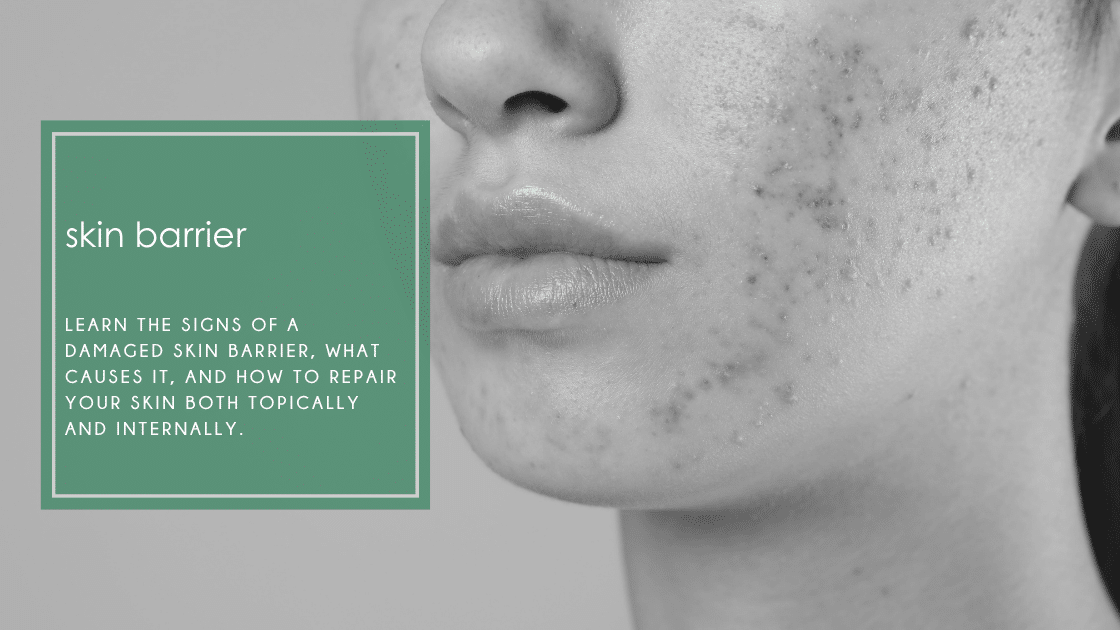
Picture your skin like a brick wall. The skin cells are the bricks, while the oils, ceramides, and cholesterol make up the mortar holding it all together. Healthy skin is like a brick wall on a brand-new house; the bricks are perfectly lined up. Now, picture an old building with a broken-down brick wall, there are cracks in the bricks, the mortar has broken off in some parts, and there are holes in some of the bricks. This is what a damaged skin barrier looks like. The skin barrier’s job is to protect your body from bacteria, viruses, pollution, and environmental toxins. When the barrier becomes broken down, harmful substances can not only enter the skin, but they can alter the skin’s microbiome. This is why maintaining a healthy skin barrier is crucial.
Why Does my Skin Suddenly Feel Tight, Dry, or Rough Even When I Moisturize?
The skin barrier protects anything from entering the skin. When the above mentioned elements break the skin barrier down, a process called Transepidermal Water Loss (TEWL) occurs. TEWL means water is evaporating, leaving the skin dry. If left untreated, the skin feels tight, dry, and rough. No amount of moisturizer helps because moisturizer only works on the skin’s surface. TEWL happens in the deeper layers of the skin.
Why Does my Face Sting, Burn, or Turn Red When I Use Products I’ve Tolerated for Years?
For the same reason; transepidermal water loss (TEWL). TEWL is measured by the amount of water lost in the skin. TEWL is a naturally occurring occurrence but many factors accelerate this process, further damaging the skin. If left untreated or if you continue applying damaging or harsh skincare products, this results in the skin having a stinging or burning sensation. Your skin is screaming to you to stop what you’re doing, because it needs repair and restoration.
Is my Skin Barrier Damaged, or is this “Just Sensitive Skin”?
There is a difference between sensitive skin and a damaged skin barrier. Sensitive skin is a genetic predisposition. Nerve endings tend to be closer to the skin’s surface or the skin is thin and has visible blood vessels; and why some people flush easily. Damaged skin barrier means the skin is compromised and can’t hold onto water. Bacteria, pollutants, and other harmful substances can enter the skin. PubMed says, “Disruptions in the skin barrier have been linked to increased TEWL values in dermatologic diseases such as psoriasis and atopic dermatitis.”
Can a Damaged Skin Barrier Cause Breakouts, Clogged Pores, or Inflammation too?
Yes, a weakened skin barrier increases the production of skin proteins that control inflammation. This increased activity disrupts the skin barrier in two ways:
1) Skin cells swell in an attempt to protect any harmful substances from entering the skin. This might sound like a good thing, but this process further damages the skin barrier.
2) Alters the oil glands by either over or under producing oil. This shows up as dry but oily skin. Oil glands lubricate the skin barrier and when this is altered, leads to more damage. PubMed says, “The skin microbiome, comprising bacteria, fungi, viruses, and their surrounding environment, coexists with the skin barrier and influences it through physical, chemical, and immune mechanisms.”
What Ingredients Repair the Barrier, and Which Ones Should I Avoid for Now?
Simple skincare is key. Your skin is a living organ and all our organs are capable of repairing themselves. To stop the skin barrier from further damage, simplifying your skincare is the most important thing you can do. First, stop using any foaming or gel cleansers, exfoliants, acids, actives, or multi-step routine. Instead, switch to either a cream-based or oil-based cleanser twice a day. Then use a hydrating moisturizer that includes ceramides, jojoba oil, or panthenol. As PubMed says, “Ceramides can replenish natural lipid components and stabilize the skin barrier structure”
How Often Should I Exfoliate Without Weakening my Barrier?
Exfoliation should be done with caution because if your skin barrier is compromised, exfoliation will worsen your skin. We recommend it once a week, but only if your skin can tolerate it. If you are working to repair your skin barrier, skip exfoliation while your skin heals. Then slowly exfoliate weekly with a gentle gommage or enzyme exfoliant. Avoid scrubs, acids, or anything aggressive, because this is what most likely contributed to a weakened skin barrier.
Does Menopause or Perimenopause Make Barrier Issues Worse?
Yes, declining estrogen levels in perimenopause and menopause impact the skin’s hydration levels, oil production, collagen, elasticity, and skin thickness. Our skin has glycosaminoglycans (GAGs) which play a key role in skin hydration. GAGs act like a magnet to hold water in the skin. Declining estrogen levels deplete the function of GAGs which is why your skin becomes dry during perimenopause and menopause. Many women complain that their skin suddenly feels dry overnight. PubMed says, “Estrogen prevents age‐related dryness and maintains the skin’s water‐holding capacity by stimulating the production of glycosaminoglycans such as hyaluronic acid.”
Can Gut Health Affect Dryness, Redness, Eczema, Rosacea, or Acne?
Yes, the gut and skin share similar microbiomes and barriers. What is not talked about enough is the fact that if we have an unhealthy gut (which most of us do) it blocks our detoxification and drainage pathways. When this happens, the skin is the next in line detox pathway. Inflammatory skin conditions such as acne, rosacea, eczema, dermatitis, sensitive skin, and psoriasis are signals that your gut needs some attention. PubMed says, “Diet can have a vital role in the maintenance of particular skin pathologies, when those food ingredients impair the intestinal barrier, which leads to gut bacteria entering the bloodstream.”
What Should I Eat, Take, or Change in my Routine to Support Both the Gut and Skin Barrier?
Good nutrition is the basis of a healthy gut and healthy skin. A good starting place is to increase the amount of animal protein you consume daily. Increase your good fat intake, such as olive or avocado oil, butter, ghee, or beef tallow. This helps with hormones, blood sugar regulation, and keeping you full longer between meals. Swap out carbohydrates for fruits and vegetables. Eliminate anything processed or prepackaged, sugar, gluten, dairy, soy, and seed oils. The goal is to reduce inflammation and swapping those foods out with whole foods is the best place to start. PubMed says, “Both the intestine and the skin host diverse bacterial, fungal, and viral species that maintain symbiosis with the human habitat. Disrupting this balance might lead to an impaired barrier function. Skin homeostasis recovery after disturbance or stress through gut microbiota enacts on both innate and adaptive immunity.”
From a skincare perspective, starting with simple topical skin treatments is best. Start with either a cream-based or oil-based cleanser to wash and a hydrating moisturizer both morning and night. Once your barrier is healed, you may exfoliate once a week with a gentle gommage or enzyme. Start adding actives slowly, but opt for serums with hyaluronic acid, niacinamide, and peptides. These are gentle and won’t compromise your skin barrier. Avoid anything containing Vitamin C, retinol, Vitamin A, scrubs, or any acids.
Ready to Get Started?
If you are looking for skincare products, our online store contains the mentioned products. Click here to shop for skincare.
If you have tried eliminating inflammatory foods, simplifying your skincare routine, and working to improve your lifestyle, but your skin is still struggling. Please visit our website to book your first appointment today. We would love the opportunity to either work with your skin or run functional testing to help you understand where your imbalances are so you can heal your gut.