Omega 3 for Perimenopause
Omega 3 for Perimenopause: The Fix for Brain Fog, Anxiety & Dry Skin
It’s 2 AM, your heart is racing slightly, you’re awake for no clear reason, and your doctor told you that your labs look ‘completely fine. Today, we are talking about how using omega-3 for perimenopause can improve your symptoms and support your body as it transitions through this time.
Why Do I Feel So Anxious, Tired, and Foggy During Perimenopause If My Labs Are Normal?
Standard blood work checks broad baseline markers, not tissue-level inflammation or fatty acid deficits. Fluctuating estrogen affects your gut, brain, and inflammatory response. Omega-3s, specifically EPA and DHA reduce inflammation and support neurotransmitter function to steady mood swings while supporting your gut lining. The Gut Health Dietician notes, “Omega-3s support brain chemistry, particularly pathways involved in mood regulation, and help reduce inflammation in the nervous system. Research consistently shows benefits for triglycerides and heart health, and more modest but meaningful support for mood and emotional resilience in menopausal women. They’re not a treatment for anxiety or depression, but they can be a background support during a hormonally vulnerable time.”
Why Is My Skin Suddenly So Dry, Dull, and Aging Fast In My 40s?
Estrogen is responsible for keeping the skin barrier plump and hydrated. When estrogen dips, the moisture barrier collapses, leading to adult acne, redness, and severe dryness. Adding in Omega-3s reinforces the skin barrier from the inside out, holding onto hydration and calming skin inflammation, like rosacea or perimenopausal breakouts. The American Academy of Dermatology explains, “When the skin continues to lose water and cannot heal itself, skin can become excessively dry. Age, certain medications, and disease can also cause skin to become excessively dry.” Focus on hydrating topical products like a cream or oil cleansers, hydrating serums, and heavier moisturizers on the face and body to protect your skin barrier.
Why Do My Joints Hurt and Why Am I Waking Up Inflamed?
Women in their 40s often complain about unexplained joint stiffness, morning soreness, or feeling “puffy” even though they exercise and eat well. Joint pain becomes increasingly common during perimenopause because dropping hormone levels remove the natural anti-inflammatory cushion in your joints.
Rather than chasing symptoms, we work to understand why you have joint pain in the first place. Dr. Mark Hyman explains, “Big triggers of inflammation that impact our joints include sugar and refined carbs, extra weight, leaky gut, toxins, infections, stress, and poor sleep—plus joints naturally get less blood and oxygen as we age. This is why it’s important to create an anti-inflammatory lifestyle plan starting with real whole foods, and incorporating regular exercise, stress management, gut repair, and targeted anti-inflammatory supplements.” Omega-3s act as powerful natural anti-inflammatories by inhibiting pro-inflammatory pathways. Most women consume more omega 6s than omega 3s, but flipping this ratio toward 2:1 (omega-3 to omega-6) supports optimal health, less joint pain, and reduced perimenopause symptoms.
What Are Omega-3s for Perimenopause?
Omega-3 fatty acids are essential polyunsaturated fats that your body cannot make on its own. They are essential for joint mobility, controlling inflammation, brain function, eye health, and cardiovascular wellness. There are two primary forms of omega-3s:
- Eicosapentaenoic Acid (EPA): Found in fatty fish such as salmon, mackerel, and sardines. It is best known for cardiovascular support and lowering systemic inflammation.
- Docosahexaenoic Acid (DHA): Found in fatty fish, shellfish, and algae. It is essential for cognitive function and eye health.
Omega-3s are essential for women navigating hormonal shifts because they minimize mild symptoms while helping prevent long-term inflammatory health issues. As The Menopause Co explains, “These essential fats support cardiovascular health, brain health, and bone density, all areas of particular concern for women navigating hormonal changes during this life stage.”
Can Omega-3s for Perimenopause Help with Hot Flashes and Night Sweats?
Yes. While Omega-3s are not a replacement for hormone therapy, clinical research shows that increasing your omega 3 intake through targeted nutrition or supplementation can help reduce the frequency and intensity of hot flashes by supporting vascular tone and autonomic nervous system balance.
What is the Best Type of Omega-3 for Perimenopause Symptoms?
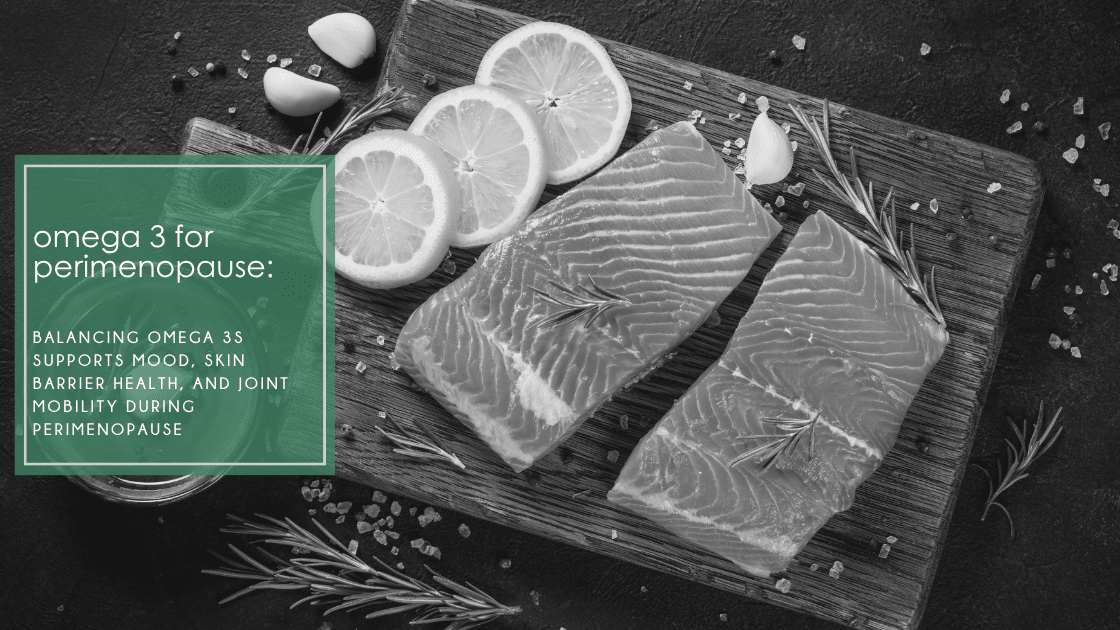
We recommend eating fatty fish twice a week to increase omega-3 levels naturally. Dietary sources are ideal, many off-the-shelf supplements don’t contain high enough amounts of omega 3 or use forms your body cannot easily absorb. Aiming to eat salmon 1-2 times a week or enjoying sardines a few times a week is one of the most effective ways to fuel your body with active omegas. If you don’t eat fish, plant-based options like Alpha Linoleic Acid (ALA), found in chia and flax seeds, are popular. However, your body must convert ALA into usable EPA/DHA. Because perimenopause and aging slow this enzymatic conversion, relying solely on plant seeds often falls short. In these cases, supplementing with a high-quality, high-potency EPA/DHA supplement is essential.
Get to the Root Cause of Your Symptoms
You don’t have to navigate perimenopause alone or rely on trial-and-error. An Integrative Perimenopause Assessment helps map out your body chemistry so you can regain control of your health.
Click here to schedule your free discovery call.