
GLP-1 and Its Side Effects on Skin & Overall Health
The Missing Step Before Starting a GLP-1
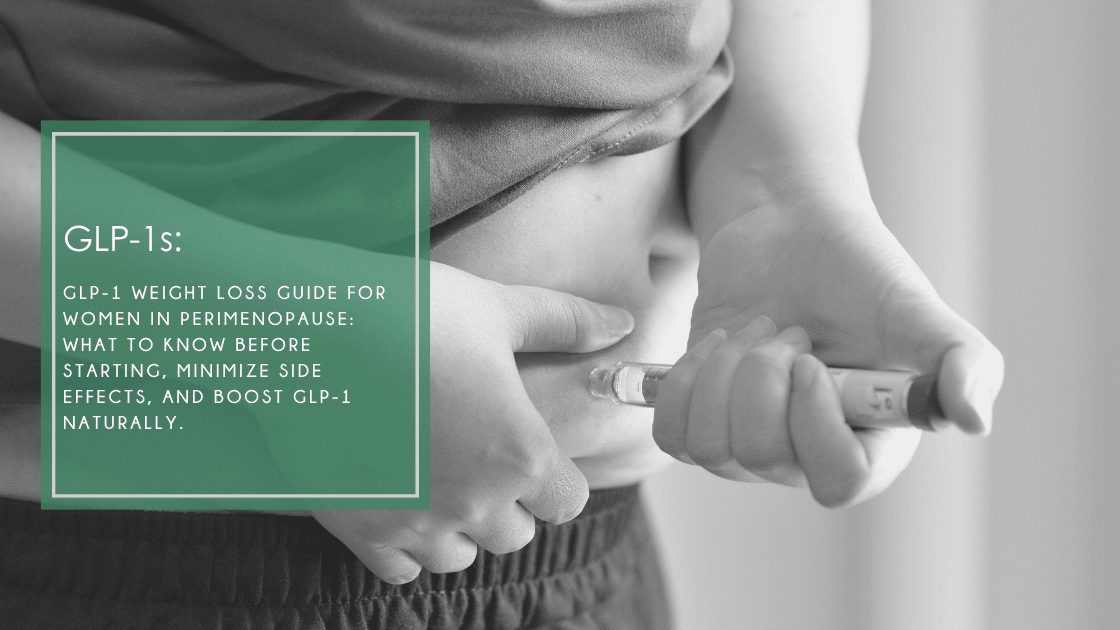
GLP-1s are everywhere right now; and more women who are navigating perimenopause weight gain are turning to their doctor to help. Today we are going to talk about what GLP-1s are/do, why women suffer from side effects, how to effectively prepare your body for a GLP-1, and natural alternatives if you are looking for other options. Let’s get started!
What are GLP-1s?
GLP-1 or glucagon-like peptide-1 is a hormone made naturally in your gut to control blood sugar, slow digestion, and manage your appetite. Originally designed for type 2 diabetes management, but since then GLP-1s have become the go-to drug for weight loss. How Do They Work?
There are three main factors at play when taking a GLP-1: digestion slows, appetite decreases, and blood sugar stabilizes.
Slower Digestion: Food stays in the stomach longer, which means you feel fuller sooner and stay satisfied longer.
Appetite Suppressant: The medication sends a signal to the brain to reduce hunger, so naturally you won’t eat as often.
Blood Sugar Stabilizer: The medication lowers glucagon, the hormone responsible for increasing blood sugar. This keeps insulin levels lower and more balanced.
Why are GLP-1s so Popular Right Now?
GLP-1s have been around for many years, as they were approved in 2017 for type 2 diabetes. What’s changed now is visibility, many popular celebrities and social media influencers are using them and pushing them into mainstream conversations. While something may be popular, it doesn’t always mean it’s good for you.
Weight loss is a sore subject, especially for women. I remember my mom trying every diet, weight loss pill, and exercising like crazy to stay thin (and this is a familiar story for a lot of women). Chun-Su Yuan, MD, PhD of UChicago Medicine says, “The current fervor for GLP-1RAs in the capital markets as well as in the general public, especially in terms of weight reduction, is probably going to result in overuse. This should raise a red flag.”
Do you Still Need to Change Your Diet on a GLP-1?
Yes, it is highly recommended to change your diet. However, many people assume the medication will do all the work, but in actuality pairing GLP-1’s with a balanced and nutritious diet will improve the outcome (and will even build better habits that last long after medication). Establish these healthy eating habits by prioritizing animal protein, good, healthy fats, and substitute your vegetables for carbs.
Why Do Fat Cells Store Toxins in the First Place?
Body fat, also known as adipose tissue and made from adipocyte cells, regulate body temperature, metabolism, and hormone balance. Subcutaneous fat is the good fat our body needs, however, adipose tissue leads to diseases such as type 2 diabetes, cancer, and heart disease.
Body fat is known to store environmental toxins, called persistent organic pollutants (POPs), as a way to protect the cells, mitochondria, blood, kidneys, liver, and gut from damage. When fat cells are released during weight loss, this causes body burden. PubMed says, “When discussing toxicants in AT [adipose tissue], it is important to define the process of bioaccumulation, which refers to the build-up of substances in the body because the substance is not readily metabolized and excreted. Many organic compounds not only resist environmental degradation, but may also bypass liver biotransformation enzymes and diffuse into AT. Highly lipid soluble POPs can disseminate through the food chain by collecting in body fat and biomagnifying, or increasing in concentration as they move from one organism to another.”
Is This Why I’m Having so Many GLP-1 Side Effects?
Yes. Toxins stay stored in the fat tissue and accumulate for many years until weight loss occurs. When you start a GLP-1 and it stimulates weight loss, you are releasing a toxic burden on your body and this causes negative side effects. Toxins are lipophilic, which means they dissolve in fat, not water. Dr. Aleksander Kanevsky puts it, “Adipose tissue can play a buffering role, keeping these compounds sequestered and out of circulation for as long as weight remains stable. The mechanism makes sense when you frame it this way: the fat is not just weighing you down. It may, in some cases, also be shielding your brain, liver, and endocrine system from compounds it cannot break down. When that fat disappears quickly, the shield comes down.”
Side effects come with any medication and the release of toxins from fat cells increase these side effects. There are two ways to minimize side effects:
- Start with microdosing to give your body more time to adjust and process what is being released; faster isn’t always better.
- Prepare your body in advance to be able to detox the toxins before starting any weight loss program (it makes the process smoother).
How to Prepare Your Body Before Starting a GLP-1?
To maximize outcomes and minimize side effects, prepping your body before beginning a GLP-1 is key. Start by opening your drainage pathways (we will go over this later in the blog), which tend to become sluggish when inflammation is present. The body drains through the following pathways: colon, skin, liver, kidneys, and lymphatic system. If any of these are blocked, toxins are recirculated into your body instead of leaving and cause negative side effects. This is why people end up with the “Keto or Ozempic flu”. It’s not the diet causing these effects, it’s the toxic burden in your body that causes you to feel achy, nauseous, tired, and suffer from headaches.
Simple ways to prepare your body:
Eat better: Stop eating processed and pre-packaged foods, gluten, sugar, and seed oils. Switch to animal-based protein rich meals, good, healthy fats, and vegetables as your carbohydrates. This helps improve your digestion so your colon and skin can begin to work optimally.
Hydration: Drinking more water is important, but so is your body’s ability to flush toxins through your body. Increasing your salt intake with every meal and taking electrolytes daily helps flush toxins from your blood and kidneys.
Movement: Get outside and move daily. Taking a daily 10-15 minute walk, especially after eating, stimulates your lymphatic system, which has no pump. The lymphatic system is your waste removal system, this system needs to be working to detox your body.
Sleep: When you get enough rest, your cells, tissues, and organs repair themselves. It’s not the quantity of sleep that matters, it’s the quality. Start a bedtime routine so your body knows it’s time to rest.
What Are Drainage Pathways?
Drainage pathways are how your body eliminates toxins and waste. These systems are part of the drainage pathway: colon, skin, liver, lymphatic system, tissues and organs, and cells. If any of these are blocked, your body circulates toxins and causes you to feel sick. In a previous blog, we broke this down in more detail.
How do you open your Drainage Pathways?
Think of drainage pathways like a funnel, starting with your colon all the way down to your cells. If your colon is blocked from constipation, the rest of your body follows. Our body lets us know by giving us signs. Unfortunately, these signs are everyday things we deal with so we ignore them. From our previous blog, “We notice signs from the body in the form of fatigue, headaches, joint pain, skin conditions, sleep disturbances. Yet these very signs are ones we tend to ignore and keep pushing through.”
Doing the above mentioned things to prepare your body for a GLP-1 also increases the opening of your drainage pathways. If you are doing all these things and still struggling with constipation, working with a functional medicine doctor to guide you is the next best option. We have supplements to support your drainage pathways. We highly recommend this before beginning any GLP-1 medication.
Can you Boost your Body’s Natural GLP-1 Production Without Medication?
Yes, GLP-1 production is influenced by the gut microbiome. Our gut is made up of trillions of bacteria and when there is an imbalance, inflammation, or overgrowth of bad bacteria, viruses, parasites, candida, etc gut issues occur. Important functions of the gut are short-chain fatty acids (SCFAs) and secondary bile acids. When SCFA production is low, IBS-like symptoms appear and this is the basis of many GI issues. SCFAs can be increased by proper nutrition, diet, and lifestyle. Secondary bile acids are bacterial metabolites formed in the gut from bile.
Bile acids work to reduce inflammation and are reabsorbed in the blood stream back to the liver. Both have a positive effect on stimulating GLP-1 in the gut. Due to poor diets and unhealthy lifestyles that increase leaky gut, both of these decrease and weaken the gut’s ability to naturally produce GLP-1 production. Changing your diet, increasing water and electrolyte intake, getting exercise or movement, and improving the quality of sleep, you can naturally stimulate your body’s GLP-1 production without having to take medication.
Ready to Get Started?
If you are interested in prepping your body for a GLP-1 or want to avoid medication and naturally stimulate GLP-1 production in your body, we would love the opportunity to help you. Please visit our website to get started today!
