Metabolic Monitoring For Midlife Women
Metabolic Monitoring for Midlife Women: Why Your Blood Work Is “Normal” But You Still Feel Terrible
Metabolic monitoring for midlife women is crucial to maintaining long-term health, energy, and healthy skin after 40. Yet, this topic is rarely talked, leaving millions of women struggling with unexplained fatigue, stubborn weight gain, and skin changes while being told their standard lab results are “normal.” Standard doctor checks usually stop at basic hormone panels, TSH, and a basic metabolic panel, frequently missing early-stage insulin resistance and functional thyroid imbalances. Here’s what you need to know about metabolic monitoring after 40 and how to take control of your metabolic health.
What is Metabolic Monitoring for Midlife Women?
Metabolic monitoring for midlife women is the targeted tracking of blood sugar handling, insulin sensitivity, systemic inflammation, and hormone clearance as estrogen levels naturally decline. As estrogen drops, your body’s ability to process glucose and store fat changes significantly. Metabolic monitoring helps identify subtle internal shifts before they progress into chronic conditions like type 2 diabetes, Alzheimer’s, heart disease, or thyroid dysfunction.
Effective metabolic monitoring combines advanced lab testing with at-home tracking:
- Advanced Blood Panels: Testing HbA1c, fasting insulin, and fasting glucose to calculate your HOMA-IR score, the gold standard marker for early insulin resistance. Inflammatory Markers: Checking hs-CRP and homocysteine to assess systemic vascular and cellular inflammation.
- Continuous Glucose Monitor (CGM): Wearing a CGM at home is a great tool to monitor real-time blood sugar spikes and crashes driving by certain foods, stress levels, and poor sleep.
Why Are My Labs Normal if I Have Perimenopause Symptoms?
Your blood labs can come back “normal” during perimenopause because standard blood draws only capture a single snapshot in time, whereas perimenopausal hormones fluctuate from day-to-day. A single normal test result does not mean your hormones and metabolic pathways are functioning optimally throughout the month.
To get an accurate picture, functional medicine utilizes comprehensive hormone, thyroid, and metabolic testing. Expanded panels evaluate urine/saliva hormone metabolites, adrenal cortisol patterns, and gut/liver clearance pathways to find the root cause of your symptoms. Superpower explains, “Hormone blood tests help most when periods change or stop before 40. That early shift can signal premature ovarian insufficiency (POI), a loss of ovarian activity before 40.”
How This Affects Your Skin
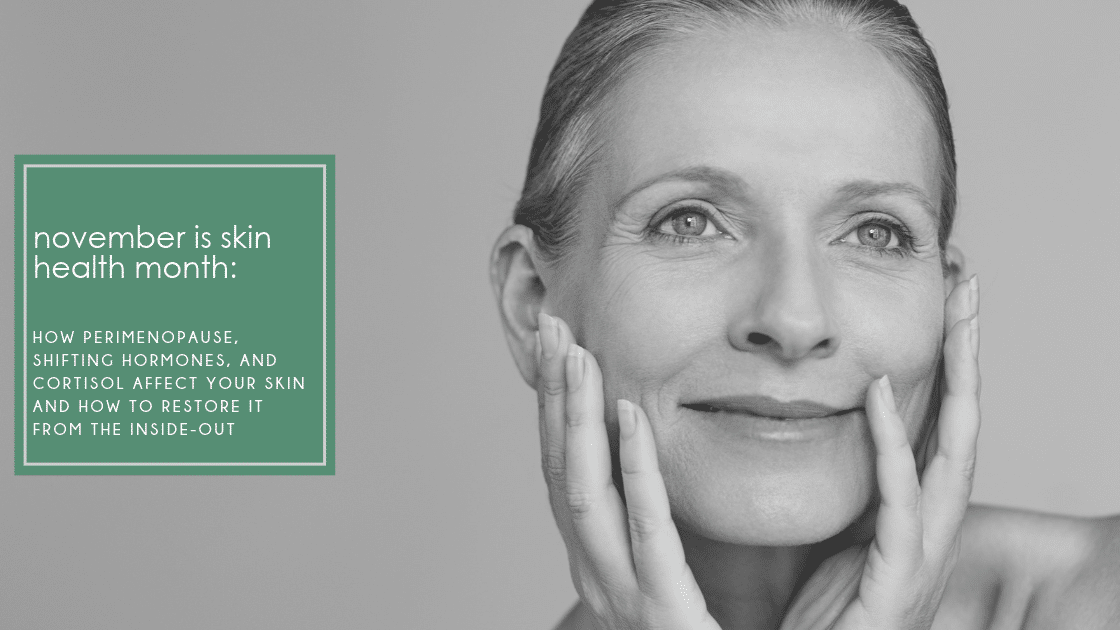
Internal metabolic fluctuations directly impact your skin structure. Cellular stress and hormonal imbalances break down collagen and elastin fibers, weaken the skin barrier, increase inflammation, and lead to a noticeable loss of firmness and hydration.
Am I In Perimenopause or Is It My Thyroid?
Because thyroid dysfunction and perimenopause symptoms share identical symptoms, including fatigue, weight gain, brain fog, temperature sensitivity, and hair thinning, it is common to experience both simultaneously after 40. Standard care usually tests only TSH, and maybe T3 and T4 levels, which frequently miss subclinical hypothyroidism or Hashimoto’s. Because thyroid hormones regulate overall cellular metabolism, starting hormone replacement therapy (HRT) without optimizing thyroid function often results in unimproved symptoms. Healthful Elements explains, “The thyroid is extremely nutrient dependent and being mindful of your diet is critical for managing hypothyroidism and Hashimoto’s—which in turn, can help women glide through “the change” (and those pre-change years) as unscathed as possible.”
To get to the root cause rather than applying a temporary band-aid, it is vital to test a complete thyroid panel which includes Free T3, Free T4, Reverse T3, and TPO and TgAb antibodies, alongside ferritin, iron, and key metabolic markers.
How This Affects Your Skin
An underactive thyroid slows down cell turnover, leading to persistent dryness, dullness, rough or flaky patches, and eczema flare ups. Decreased thyroid activity also causes facial puffiness and accelerated collagen degradation.
Why Am I Gaining Belly Fat in My 40s When My Diet Hasn’t Changed?
Midlife belly fat gain often occurs without diet changes because declining estrogen naturally increases insulin resistance and cortisol sensitivity, signaling your body to store visceral fat in the belly. When cells become resistant to insulin, your body believes it’s in a constant energy deficit. It pumps out excess insulin, which locks fat into storage and makes weight loss nearly impossible using traditional calorie restriction or high-intensity cardio.
Dietary Strategies for Metabolic Health
- Eliminate Inflammatory Triggers: Cut out gluten, sugar, seed oils, and ultra-processed foods
- Prioritize Protein: Increase high-quality animal protein like beef, chicken, or fatty fish to stabilize blood sugar and preserve lean muscle mass.
- Include Healthy Fats: Incorporate nutrient-dense fats like grass-fed butter, olive oil, or avocados.
- Swap Refined Carbs: Replace simple carbohydrates with low-glycemic vegetables.
Lifestyle Habits for Metabolic Health
- Post-Meal Walks: Take a 10 minute walk after meals to clear glucose from the bloodstream without spiking cortisol.
- Strength Training: Lift weights 2-3 times a week to build muscle tissue, which acts as a primary sink for excess blood glucose.
- Stress Reduction: Practice daily breathing, breathwork, or gentle yoga to lower circulating cortisol levels.
How This Affects Your Skin
Insulin-driven inflammation accelerates cellular aging and compromises the protective skin barrier. As a result, midlife skin loses its moisture-retention capacity, becoming hyper-reactive, easily irritated, and chronically dry.
Can Perimenopause Cause Insulin Resistance?
Yes, perimenopause can directly trigger insulin resistance because estrogen plays a crucial protective role in maintaining cellular insulin sensitivity. As estrogen levels drop during perimenopause, your cells become less responsive to insulin, forcing the pancreas to produce higher amounts to keep blood glucose stable.
Because fasting glucose levels often stay normal during the early stages, standard labs miss this shift entirely. Over time, untreated insulin resistance quietly increases the risk of type 2 diabetes, heart disease, autoimmune conditions, and systemic inflammation. Vibrant wellness shares, “Addressing insulin resistance is especially important during perimenopause when women become more at risk for developing cardiometabolic conditions as their hormones decline, particularly estrogen.”
How This Affects Your Skin
Elevated circulating insulin can trigger skin tags, dark velvety patches on the neck or joints, sudden hormonal acne flare ups, excess oil production, and loss of collagen leading to sagging or thin skin.
Why Do I Wake Up at 3am With Anxiety or Sweating During Perimenopause?
Waking up at 2 or 3am with sudden anxiety, heart palpitations, or night sweats during perimenopause is often caused by overnight low blood sugar, rather than hormone fluctuations. When nighttime insulin resistance causes blood sugar levels to crash in the early hours of the morning, your body releases a surge of cortisol and adrenaline to raise glucose levels, waking you up in a state of fight-or-flight panic.
Pro-Tip for Sleep: Wearing a continuous glucose monitor (CGM) can help identify nighttime blood sugar drops. Eating a small serving of healthy fat at bedtime, such as a spoonful of grass-fed butter helps stabilize glucose overnight without triggering an insulin spike.
How This Affects Your Skin
Nighttime blood sugar drops and hot flashes trigger rapid blood vessel dilation, leading to facial flushing, increased skin sensitivity, dry or itchy skin, and impaired skin repair during sleep.
How Does Gut Health Affect Perimenopause Symptoms and Skin?
Gut health directly dictates perimenopause severity and skin appearance because your gut microbiome regulates estrogen metabolism, controls systemic inflammation, and manages nutrient absorption.
The Estrobolome: Your Gut’s Estrogen Regulator
Deep within your gut microbiome lives a specialized collection of bacteria known as the estrobolome. The estrobolome produces beta-glucuronidase, an enzyme that processes and metabolizes circulating estrogen to determine whether it’s safely excreted or reactivated back into your bloodstream. When gut diversity declines during perimenopause, estrogen clearance becomes inefficient, worsening hormonal imbalances.
Gut Barrier Health and Systemic Inflammation
An imbalanced gut microbiome can weaken the gut lining, causing increases intestinal permeability, also known as leaky gut. This allows inflammatory compounds and unmetabolized toxins to leak into the bloodstream, triggering chronic systemic inflammation that manifests directly in your skin.
Skin Impact: CollagenBreakdown and Elasticity Loss
As systemic inflammation rises and protective estrogen drops:
- Accelerated Collagen Degradation: Systemic inflammation activates enzymes that break down structural collagen and elastin.
- Loss of Firmness: Skin loses elasticity and moisture, triggering dry skin, premature sagging, dullness, adult acne, or rosacea flare-ups.
Clear, radiant skin after 40 begins by supporting your estrobolome and healing your gut barrier from the inside out.
What Metabolic Tests Should I Ask For if My Blood Work is Normal?
If standard lab panels come back “normal” while you are still experiencing symptoms, ask your doctor to order comprehensive metabolic and functional testing: If they refuse, it’s time to find a doctor who will.
Blood and Metabolic Panels:
- Complete Blood and Iron Panel: CBC, iron, ferritin, TIBC, and saturation %
- Advanced Metabolic Markers: HbA1c, fasting insulin, and fasting glucose to measure HOMA-IR
- Cardiovascular and Lipid Panel: Apo B, Lp(a), particle size, hs-CRP, and homocysteine
- Complete Thyroid Panel: TSH, T3, T4, Free T3, Free T4, Reverse T3, Thyroid antibodies (TPO and TgAb)
- Vitamins: Vitamin D
Functional Medicine Testing:
- DUTCH Test (Urine/Saliva): Evaluates hormone metabolites, estrobolome activity, adrenal cortisol rhythms, and melatonin.
- GI-MAP (Stool test) Assesses gut dysbiosis, candida, parasites, H.pylori, leaky gut markers, and beta-glucuronidase levels.
- Micronutrient Testing: Analyzes intracellular amino acids, nutrients, and vitamins deficiencies impairing cellular healing.
- At home CGM: Tracks daily blood sugar variability prior to your doctor appointment
Ready For Metabolic Monitoring for Midlife Women?
You do not have to settle for feeling exhausted, bloated, or uncomfortable in your body because you turned 40. Working with an experienced functional medicine practitioner allows you to match your symptoms with comprehensive data to help you understand the root cause of your midlife shifts.
Click here to book your free discovery call today.