Why Do Skin Problems Keep Coming Back (Part 2)
Why Do Skin Problems Keep Coming Back: Cortisol, Detox, and Hidden Inflammatory Triggers Driving Chronic Rosacea, Eczema, and Acne in Your 40s
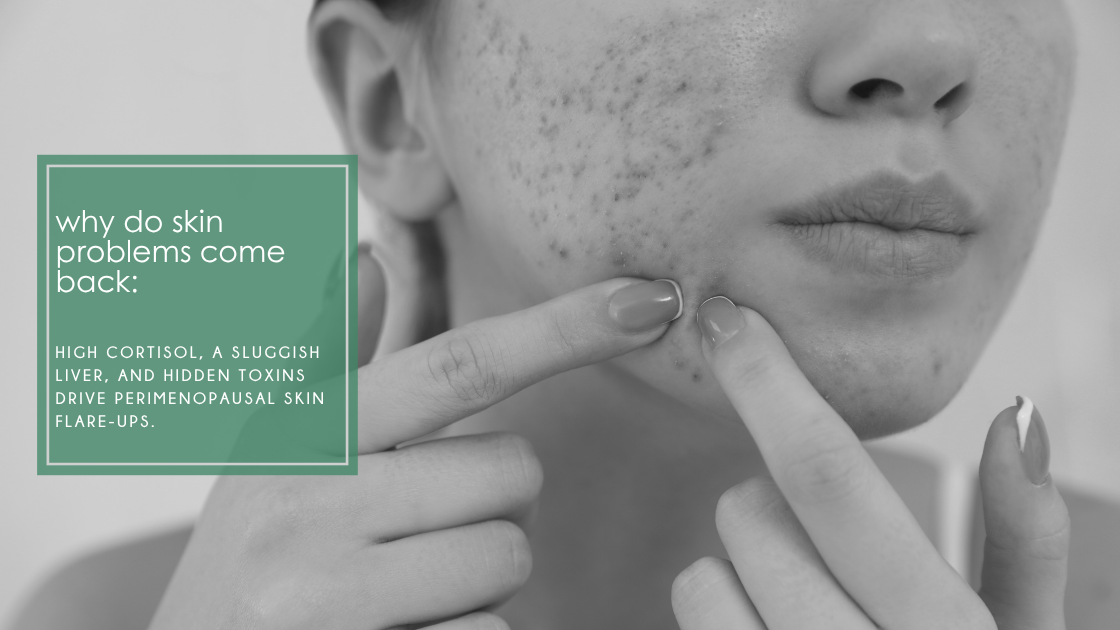
“Why do my skin problems keep coming back?” is one of the single most questions I hear from women over 40. Today, in part 2 of our series, we are diving into chronic stress, high cortisol, sluggish liver detoxification, environmental toxins, and hidden inflammatory triggers that silently drive perimenopausal skin flare ups.
If you missed part 1, where we covered the gut-skin axis and estrogen decline, you can catch up here.
Why is My Skin Breaking Out and Inflamed in Perimenopause Even Though My Skincare Routine Hasn’t Changed?
In part 1, we talked about how declining hormone levels impact the skin barrier, making it far more susceptible to moisture loss and structural damage. One of the most common complaints women face in their 40s is the simultaneous battle with severe dry skin and adult acne.
As estrogen levels drop, your skin loses its natural ability to retain water. This is why you can apply a thick moisturizer, only to feel tight and dry an hour later. It’s not your moisturizers fault, your skin cells are simply struggling to hold onto hydration. This leads to a compromised skin barrier. When the barrier is weak, surface bacteria can enter easily, and the skin’s local immune defense cannot fight off pathogens like it used to. The result? Sudden skin flare ups, chronic reactivity, and new sensitivities that seemed to develop overnight.
Can High Cortisol and Chronic Stress Cause Hormonal Skin Flare-Ups After 40?
Yes, chronic stress elevates cortisol levels, directly impacting both your nervous system and your skin. During perimenopause, baseline cortisol naturally rises as estrogen and progesterone decline. Many women notice they can’t bounce back from daily stress the way they did in their 20s and 30s. When stress remains constantly elevated, your skin pays the price. The skin and brain are in constant communication via sensory receptors. A study published in PubMed notes, “The interaction between psychological stress and skin diseases is bidirectional. Psychological stress can activate the interplay among the nervous, endocrine, and immune systems, triggering the onset and progression of skin diseases.”
How Does a Sluggish Liver Cause Estrogen Dominance and Adult Skin Problems?
When dealing with chronic skin inflammation, most people don’t think to look at the liver, yet it plays a key role in hormone regulation. As our largest internal organ, the liver handles both systemic detoxification and metabolic waste.
One of the liver’s jobs is metabolizing used hormones through phase 1 and phase 2 detoxification pathways. If either phase is sluggish or blocked, active hormones back up in your bloodstream. Estrogen dominance occurs when the liver cannot break down and clear estrogen efficiently, causing it to get reabsorbed and stored in the body. As Cutler Integrative Medicine explains, “Signs of estrogen dominance include heavy or painful periods, breast tenderness, mood swings, weight gain (especially around the hips), headaches, and low energy.” When your liver becomes overburdened and hormones back up, that internal congestion frequently shows up as adult acne, rosacea, or hyperpigmentation.
What Are Environmental Toxins (Xenoestrogens) and How Do They Trigger Perimenopause Skin Problems?
Environmental toxins, specifically xenoestrogens, are synthetic chemicals that mimic natural estrogen in the body, throwing your hormonal baseline into chaos. Xenoestrogens work by binding to or blocking your natural estrogen receptors. Xenoestrogens are hiding everywhere: in conventional beauty products, synthetic fragrances, chemical sunscreens, plastics, household cleaners, pesticides, and municipal tap water. A report by the National Toxicology Program highlights that, “Common endocrine-disrupting chemicals (like BPA and its analogues) present significant concern due to their ability to alter endocrine function even at low concentrations.”
When fluctuating perimenopausal hormones are combined with a high toxic load, your liver becomes overwhelmed. If xenoestrogens block your estrogen receptors, natural oil and moisture production drop rapidly, leaving you with dry, itchy, or reactive skin that breaks out easily.
Why Do I Feel Exhausted, Bloated, and Brain-Fogged Every Time My Skin Flares Up?
Systemic perimenopause symptoms should never be viewed in isolation. When skin flare ups co-occur with exhaustion, severe bloating, and brain fog, it often points to an overactive immune system or underlying autoimmune activity. Autoimmune conditions often start with quiet whispers, subtle symptoms that women tend to blow off. When ignored, those signals get louder. Because autoimmune conditions, thyroid dysfunction, and perimenopause share overlapping symptoms, standard blood panels frequently miss the full picture. Infusion Health explains, “When immune activity first escalates, it often affects tissues with rich blood supply or delicate barriers: brain and nerves, eyes and mouth, skin and nails, gut lining, and small blood vessels. This is why early signals often include cognitive haze, dryness, photosensitive rashes, nail changes, bloating, and cold-induced color changes in the fingers.”
Which Hidden Inflammatory Triggers Drive Chronic Skin Rosacea, Eczema, and Acne in My 40s?
While hormonal fluctuations during perimenopause are the primary driver, several underlying shifts occur simultaneously:
Estrogen Decline: Estrogen acts as your skin’s anti-inflammatory shield and barrier protector. As estrogen levels drop, Transepidermal Water Loss (TEWL) accelerates, because skin cells can no longer trap moisture. Combined with natural collagen loss, the skin becomes thinner, drier, and more sensitive.
Mast Cell Reactivity: Mast cells are immune cells located near the skin’s surface that alert the body about foreign invaders. Declining estrogen causes mast cells to become overly reactive, releasing excess histamine. Histamine drives hot flashes, flushing, intense itching, and increased skin redness, often triggering more severe rosacea flare ups.
Androgen Dominance: Even if male hormones aren’t increasing, dropping estrogen and progesterone levels leave androgens (like testosterone) to remain higher. This stimulates excess oil production, leading to painful or cystic acne along the jawline or chin.
What You Can Do About It Right Now
- Protect Your Skin Barrier: Switch to gentle, non-stripping skincare products. Use a cream or oil-based cleanser and stop using harsh scrub exfoliants or aggressive acids. Opt for a gentle enzyme or gommage exfoliant once a week, hydrate with serums containing hyaluronic acid or niacinamide, and always lock it in with a barrier-repair moisturizer.
- Prioritize Bioavailable Whole Foods: Ditch the ultra-processed foods, gluten, sugars, and seed oils. Focus on increasing bioavailable animal proteins, good healthy fats (butter, avocados, olive oil, or beef tallow), and swap your carbohydrates for vegetables. Supporting your digestion reduces systemic inflammation that travels along the gut-skin axis directly to your skin.
- Track Your Inflammation Patterns: Keep a simple two-week food journal. Log what you eat alongside any symptoms, like acne breakouts or rosacea flushing, joint pain, headaches, or digestive changes. Identifying specific food or lifestyle triggers is one of the most empowering steps you can take.
Why Are Standard Blood Tests Missing the Internal Root Cause of My Perimenopause Skin Flare-Ups?
If your doctor told you your labs are “normal” but you still feel terrible, you aren’t crazy! Standard blood draws only offer a single snapshot in time. Because hormones fluctuate throughout the month (and day), a single blood test rarely captures dynamic hormone imbalances or poor clearance pathways.
As a functional medicine provider, I look deeper by combining blood lab panels with functional urine and saliva testing. Functional testing evaluates active hormone metabolites, liver detoxification capacity, cortisol diurnal rhythms, methylation markers, and total toxic burden. Standard lab panels rarely evaluate the full thyroid panels, fasting insulin, cardiovascular inflammatory markers, or functional nutrient levels, leaving women feeling dismissed without answers.
How Can I Support My Liver, Lower Cortisol, and Reduce Toxins to Clear My Skin for Good?
Healing chronic skin issues requires a multi-system approach: reducing environmental toxin exposure, supporting liver detoxification, regulating your nervous system, and restoring sleep quality.
1. Minimize Environmental Toxin Load
- Audit Your Home: Synthetic fragrances in perfumes, scented lotions, candles, air fresheners, cleaning and laundry detergents contain endocrine-disrupting phthalates and other harmful toxins. Swap chemical cleaners for simple DIY options using baking soda and vinegar.
- Filter Your Water: Standard tap water contains heavy metals, chlorine, and micro-contaminants. Invest in a high-quality reverse osmosis filtration system or whole house filter.
- Wash Produce Properly: Water alone doesn’t remove synthetic pesticides and toxins. Soak your fruits and vegetables in a vinegar-and-water bath for 5 minutes, then rinse thoroughly before eating.
2. Support Natural Liver Detoxification
- Cut Inflammatory Foods: Reduce sugar, gluten, seed oils, alcohol, and processed foods that contribute to a sluggish liver.
- Focus on Nutrient Density: Prioritize whole animal proteins, good, healthy fats like butter, avocados, olive oil, or beef tallow, and swap vegetables for carbohydrates.
- Hydrate with Electrolytes: Water alone isn’t always absorbed properly. Adding quality electrolytes ensures cellular hydration.
- Targeted Supplementation: Incorporating targeted support, like TUDCA, helps promote healthy bile flow and phase 2 liver detoxification.
3. Lower Cortisol and Calm Your Nervous System
- Practice Nervous System Reset Exercises: Incorporate box breathing (inhale through your nose 4 counts, hold 7 counts, exhale through your mouth for 8) 5-10 times throughout the day to tone your vagus nerve.
- Eat in a Parasympathetic State: Sit down to eat, chew thoroughly, and avoid rushing. Eating while stressed impairs stomach acid production and nutrient absorption.
- Move Gently: A 10-20 minute walk after meals or first thing in the morning calms the nervous system, supports healthy blood sugar, and improves circulation.
- Mindful Daily Practice: Dedicate 10 minutes daily to meditation, journaling, or prayer to step out of constant fight-or-flight mode.
4. Optimize Sleep Quality
- Go to Bed Earlier: Shift your bedtime back by 15 minutes to give your cells, tissues, and organs time to repair overnight
- Establish a Bedtime Routine: Creating a nighttime routine trains your body to know that its time to rest which can increase melatonin.
- Block Blue Light: Turn off ALL electronics 30-60 minutes before bed so your brain can naturally produce melatonin.
- Get Morning Sunlight: A 10-15 minute walk first thing in the morning (WITHOUT SUNSCREEN). Natural sunlight sets your circadian rhythm, improving daytime energy and melatonin in the evening for better sleep quality.
Ready to Stop Guessing? How to Support Your Liver, Lower Cortisol, and Reclaim Your Skin
If you have tried modifying your skincare routine and changing your diet but are still struggling with chronic skin flare ups, brain fog, fatigue or hormonal imbalances, you don’t have to navigate this alone.
As a functional medicine practitioner and esthetician specializing in root-cause skin health, perimenopause, and thyroid optimization, I help you uncover what is happening inside your body. We offer both in-person and nationwide virtual consultations. Click here to visit our website and book your root-cause consultation today.