Why Do Skin Problems Keep Coming Back? The Hidden Gut-Hormone Connection
Why Do Skin Problems Keep Coming Back
Recurring skin problems are what drive women to search for answers. Typically when your skin reacts, you treat it, and eventually the problem goes away. But when it doesn’t, you question everything and feel like you are doing something wrong. Nothing works like it did in our 20s and 30s. Today, we are going to answer your top questions as to why your skin problems keep coming back. This is part 1 of our 2 part series that we will talk about next month.
Why Do My Skin Problems Keep Coming Back Even Though My Routine Hasn’t Changed?
If your skincare routine hasn’t changed, but your skin is breaking out, it’s not your products. There are many other factors that affect your skin, such as diet, environment, stress, and hormonal fluctuations. Today we are going to focus on diet and hormones. Next month, we will dig deeper into stress and environmental triggers.
Why Do I Still Have Acne and Skin Flare-Ups in my 40s?
If you’re dealing with acne after 40, it has to do with hormones. Perimenopause causes many changes to your body. Perimenopause, a decline in estrogen and progesterone levels that contribute to insulin resistance, cortisol spikes, and changes to your gut microbiome. Inflammation shows up on your skin. Acne is the most common skin problem after 40, along with rosacea, eczema, hyperpigmentation, and skin sensitivity.
Why Are My Hormone Lab Results “Normal” When My Skin is Flaring Up?
Standard labs check the basic hormone levels which may not show a hormone decline until menopause. Additional hormone lab testing includes estradiol, estriol, estrone, DHEA, total, bioavailable, and free testosterone, dihydrotestosterone, sex hormone binding globulin (SHBG), prolactin, pregnenolone, along with fasting insulin and a full thyroid panel.
Functional lab testing goes beyond the blood panel to include a urine and saliva test that shows hormonal imbalances, hormone metabolites, cortisol, and endocrine disruptors to give a better understanding of how your body is processing and utilizing your hormones.
This is why I went from being an esthetician to a functional medicine doctor. I knew that by digging deeper, I would be able to answer the questions my clients are asking. And this is the reason why you are breaking out with “normal” labs. You don’t have the full picture. And your doctor doesn’t know to look deeper.
How Does Gut Health Actually Trigger Chronic Skin Inflammation?
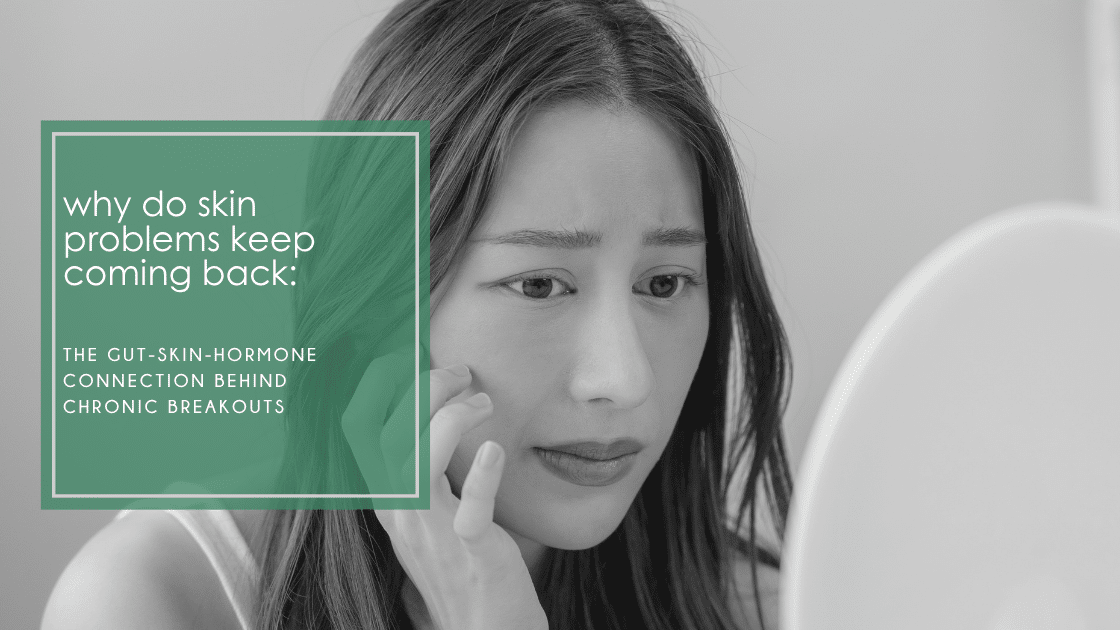
The gut and skin connect via the gut-skin axis, a bidirectional pathway between the gut and skin. When one of these systems is off, the other follows. When you have digestive problems or IBS-like symptoms, your skin microbiome and barrier become altered and skin problems occur. PubMed says, “The gut microbiome in inflammatory skin disorders such as atopic dermatitis, acne vulgaris, urticaria, and psoriasis tend to be altered and imbalanced.”
What are the Subtle Signs that My Skin Problems Keep Coming Back are From My Gut?
Gut health is the basis of most skin and health problems. The gut connects to every system and organ in the body so when the gut is dysfunctional, the rest of the body eventually follows. A condition called gut dysbiosis, an imbalance of gut bacteria causes the body to become dysregulated.
In the skin, gut problems present as acne, eczema, dermatitis, psoriasis, hyperpigmentation, melasma, aging, dark circles under the eyes, orange-peel looking skin, chronic dry skin, or sudden development of skin sensitivity.
In the body, gut problems present as bloating, gas, constipation and/or diarrhea, acid reflux, food sensitivities, chronic fatigue, brain fog, headaches or migraines, mood disorders such as anxiety or depression, and weight gain or the struggle to lose weight.
What is The “Estrobolome” and How Does Gut Dysbiosis Disrupt Hormones After 40?
When women think about hormones and perimenopause, you are not thinking about your gut. Yet most hormonal imbalances start in the gut. After our hormones do their job in our body, they go through a 3-step process to get eliminated. Step 1 and 2 occur in the liver where estrogen is made inactive through a process called glucuronidation. Estrogen then moves into step 3, through the gut. A collection of bacteria, the Estrobolome, metabolizes estrogen in the gut. This produces an enzyme called Beta-glucoronidase, which turns estrogen back into an active form so it can be reabsorbed into the bloodstream.
If you have leaky gut or gut dysbiosis, estrobolome dysfunction occurs. If you have an imbalance of estrobolome, hormone symptoms begin to show up. Paloma explains, “A dysregulated estrobolome can exaggerate the hormonal shifts of perimenopause and menopause, making symptoms worse. Too much estrogen can be reabsorbed, leading to estrogen dominance. And low estrogen circulation can worsen estrogen deficiency and menopausal symptoms.”
How to Fix My Gut Microbiome to Clear Chronic Skin Flare-Ups for Good?
There are many ways to fix your gut microbiome. As mentioned earlier, the gut and skin are connected and maintaining balance in both organs help with perimenopause symptoms and clear skin. According to PubMed, “There are increasing evidence-based publications and emerging research on the connections between how dysbiosis of the gut is linked to immune-mediated skin disorders. This dysbiosis affects the skin, much like it affects the gut, leading to an impaired skin barrier.”
The best ways to support your gut is through food and lifestyle changes:
- Nutrition: Proper nutrition is the basis for gut health. An unhealthy diet that is high in gluten, dairy, sugar, seed oils, and processed foods cause the gut barrier to break down, leading to leaky gut and gut dysbiosis because your gut can’t absorb these foods or break them down properly. Incorporate whole foods into your diet; animal protein, good, healthy fats including butter, olive, avocado or coconut oils, ghee, and beef tallow. Swap carbohydrates for vegetables and eat a variety of vegetables to increase fiber in your gut and feed the good bacteria.
- Lifestyle: How you live daily impacts the health of your gut because your nervous system is connected. Manage cortisol and stress levels by incorporating walking: 15-20 minutes daily. Bonus if you can get a morning walk in to increase Vitamin D and reset your circadian rhythm. To learn more about the benefits of sunshine to increase vitamin D, check out our latest blog.
Add deep breathing into your day: try box breathing; inhale through your nose for 4 counts, hold for 7 counts, exhale out your mouth for 8 counts. Do this 5-10 times in a row a few times a day. Breathwork is another great tool to move energy through your body and relax your nervous system. There are great videos on YouTube or search online for a class near you.
Sleep is crucial, because not getting enough rest causes health problems. If sleep is a struggle, start a bedtime routine about 30-45 minutes before you try to fall asleep. This teaches your mind and body that it’s time to rest. Avoid the phone or screens for 1 hour before bed, take a bath, play some soft music, dim the bathroom lights or grab a real book and read a few pages to make yourself tired. Do 5-10 deep breaths when you lie down in bed to relax your nervous system and encourage rest. Eat a tablespoon of butter before bed. The extra fat keeps your blood sugar from dropping too low overnight (which can wake you up).
Your Next Steps: How to Support Your Gut and Skin Today
Starting today, here are a few changes you can make. Increase hydration by drinking more water and if you forget, keep a water bottle with you at your desk, in your car, etc. If you drink water and don’t feel hydrated, take electrolytes daily. Swap processed foods for whole foods and only shop the perimeter of the grocery store instead of the aisles. An easy dinner swap: make taco bowls instead of tacos and top with lettuce, salsa or pico de gallo, guacamole or avocados.
The gut-skin connection is just the first part. Stay tuned for part 2 next month as we talk about how cortisol, liver health, environment, and inflammatory triggers affect your skin after 40. And if you want to learn more about gut or hormone testing, please visit our website to book a call today.