The Summer Skincare Guide for Women 40+
Summer Skincare: Your Skin Changed. Has Your Skincare Routine?
Summer is in full swing; the temperatures are rising, the humidity is climbing, travel season is at its peak, and so is the time we’re spending outdoors. Between all the fun, summer is also the best time to adjust your skincare to a more simple, lighter, and targeted approach. Today we are going to talk about summer skincare for women 40+ and some of the most common complaints and concerns women ask. Let’s dig in!
What is the Best Summer Skincare Routine for Women over 40?
The best summer skincare routine for women is a simple routine that covers the basics. Start with a hydrating cleanser, follow with gentle exfoliant, and layer in targeted serums like Vitamin C, hyaluronic acid, or bakuchiol. Finish with a hydrating moisturizer and a zinc-oxide based sunscreen for time spent outdoors. A simplistic routine like this protects your skin barrier while still delivering the anti-aging benefits mature skin needs most.
What is the Best Summer Skincare Moisturizer for Menopausal or Mature Skin?
When menopause hits, estrogen and progesterone levels rapidly decline. This shift in hormones causes the skin to become dry and sensitive. Due to this, a heavier moisturizer may be used, even during the summer and warmer months. After menopause, oil production slows down, which is why your skin feels dry even after applying moisturizer. This decline in hormones means the skin lacks hyaluronic acid, which holds water in and maintains a strong skin barrier. Applying a hyaluronic serum under your moisturizer can increase hydration and keep your skin barrier intact. Our favorite moisturizer for mature or menopausal skin is the Dry Skin Moisturizer.
Why is my Skin so Dry in the Summer?
Even with high humidity, dry skin can still happen, especially if you use harsh scrubs, gel cleansers, or spend time in chlorinated pools. Alcohol consumption is another culprit, dehydrating the skin, which makes it appear dry and flaky. Staying mindful of the products you’re using and the ingredients in your skincare, along with keeping hydration a top priority can make a real difference.
Why Does My Skin Get More Sensitive During Perimenopause?
This is a common complaint for women over 40 because as we get into perimenopause, our skin begins to shift from oily to dry. The biggest mistake I see women make is not changing their skincare routine to match the changes in their skin. The skin becomes sensitive and more reactive to products in perimenopause. Here are a few simple shifts you can make to avoid summer irritation:
- Use a cream cleanser or oil based cleanser to help maintain a healthy skin barrier, and avoid poor-clogging moisturizers.
- Don’t strip your skin with harsh scrubs or acids; these products break down the skin barrier, leading to skin sensitivity.
Can you Use Retinol in the Summer?
Yes, with caution. If you’ve been using retinol consistently for over a year, are diligent about daily sunscreen, and don’t spend much time outdoors, it can still be safe to use during the summer. That said, swapping your retinol for a bakuchiol serum is often the smarter seasonal choice. Bakuchiol is a plant-based retinol alternative that’s safe for the skin and great for anti-aging without the side effects.
If you’ve never used retinol and are thinking about adding it in, we recommend waiting until the fall. Retinol causes micropeeling, which causes the skin barrier to become compromised. This means your skin may be more vulnerable to sun damage and sunburns.
Does Melasma Get Worse in the Summer?
Melasma, an inflammatory skin condition, can worsen even without direct sun exposure. As someone who suffers from melasma and avoids direct sun exposure, I noticed that being outside, even in the shade, darkens my melasma. When it comes to melasma, heat triggers it to darken, not UV rays alone. Melasma is also driven by internal factors, such as thyroid dysfunction, hormonal imbalances, and adrenal fatigue from chronic stress. If you are tired of dealing with melasma and frustrated that it gets darker, no matter what you do, it’s time to find someone who can help you dig a little deeper. As mentioned in our previous blog, “Melasma is thought to be triggered by sun exposure, but multiple factors cause the skin to darken and it’s not all sun-related.”
How do I get Rid of Dark Spots and Sun Spots on my Face After 40?
Sun exposure doesn’t just tan your skin; it also darkens hyperpigmentation. Ingredients like retinol, Vitamin C, or any acid, can help light your skin, however, these are active ingredients and can increase sun sensitivity. I recommend holding off on acids and retinol until the fall. The best thing you can do is minimize direct sun exposure, especially during peak hours of 10am to 4pm. If you are going to be outdoors, be diligent about wearing sunscreen to prevent burning and wear a wide-brimmed hat. Sunburns worsen your dark spots and hyperpigmentation and create new ones. The fall is the best time to start working on lightening your dark spots and sun spots with treatments like peels and microneedling or microchanneling.
What is the Best Summer Skincare Sunscreen for Mature or Aging Skin?
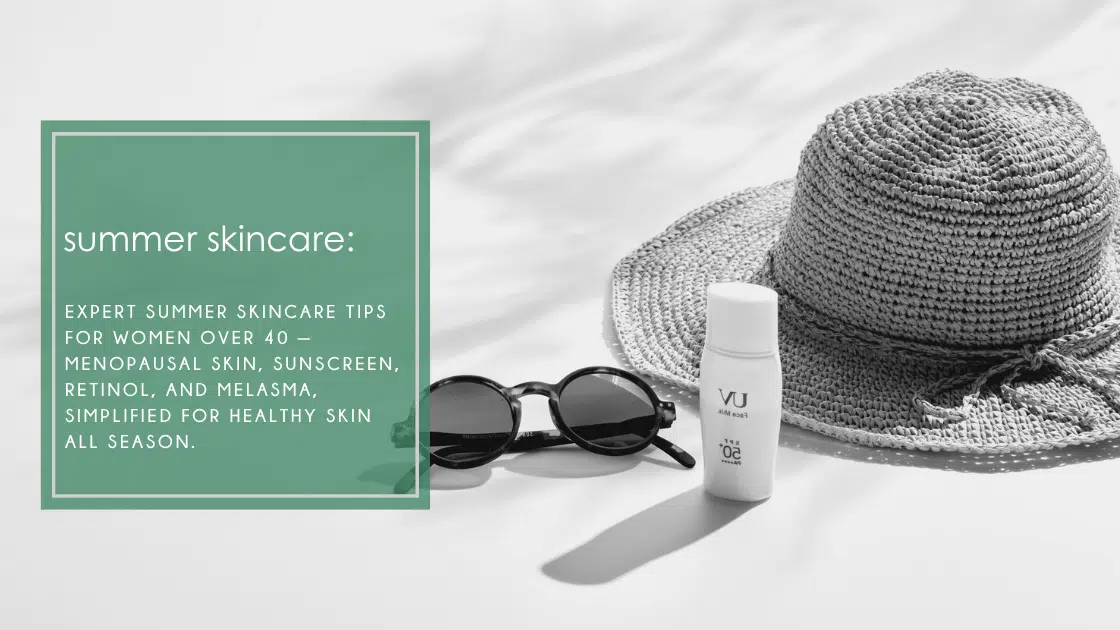
We like zinc-oxide based formulations for mature skin, since chemical sunscreens can irritate and worsen dry or sensitive skin. A great sunscreen for daily use is a tinted moisturizer + sunscreen great for hydration, sun protection, and evening out your skin tone. Protecting your skin from the sun is the best anti-aging tool you have. According to AziMD Skincare, “UV exposure is responsible for up to 90% of visible skin aging, including fine lines, wrinkles, discoloration, and loss of elasticity. And it doesn’t just happen at the beach, it’s cumulative.”
Our favorite sunscreens are ISDIN sunscreen for bringing to the pool or beach. This lightweight sunscreen formula can be easily reapplied without feeling thick and heavy on the skin. Our favorite tinted moisturizer + sunscreen formula is Suntegrity.
Does Sunscreen Cause Acne or Breakouts?
Yes, but it depends on the ingredients. Many chemical-based sunscreen ingredients can cause acne or breakouts. If you are acne-prone or notice your skin breaking out when you wear sunscreen, opt for a zinc-oxide based sunscreen instead. Our top pick is ISDIN sunscreen because it is lightweight, doesn’t clog pores, or worsen acne.
What Ingredients Should I Look for in Anti-Aging Sunscreen?
Zinc-oxide is the main ingredient in sunscreens that is recommended. As a general rule, if you can’t pronounce an ingredient, you should not use it on your skin. And here’s the truth: “anti-aging sunscreen” isn’t really its own category, wearing sunscreen is the anti-aging step. Excess sun exposure and sunburns are among the biggest drivers of visible skin aging, so daily SPF is non-negotiable.
Ready to Get Started?
If you’re looking for more support for your skin this summer, please visit our website to get started or to shop for skincare products. We are always available to help answer questions and direct you to find the best products for your skin in each season of the year and season of life. Click here to visit our website.