Eczema Causes, Symptoms & Treatment
Eczema Isn’t Just a Skin Problem, It Starts in the Gut
Eczema, also known as atopic dermatitis, has become more common in both adults and children. Affecting 10-20% of children and 2-10% of adults worldwide. Many suffer with this skin condition for years without relief. Today, I am going to talk about what causes eczema, how to treat it, and address the root cause of eczema flareups. You shouldn’t have to live with eczema flareups your whole life!
What is Eczema?
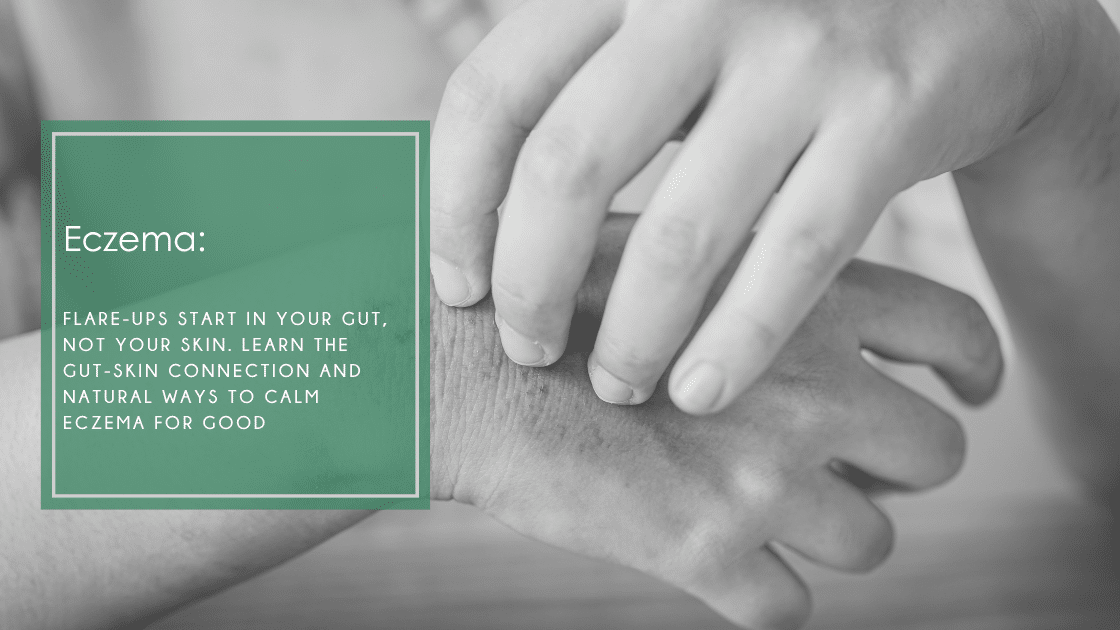
Eczema is a skin condition that appears as dry, flaky, red, itchy patches on the skin and can appear anywhere on the face or body. It is most common around the eyes, hairline, elbows, and knees; however eczema can appear anywhere.
What Causes Eczema?
There are many speculated causes of eczema, and according to the National Eczema Society, “The exact cause of eczema is unknown. Some common causes include genetics, stress, and temperature changes. You want to think of eczema flareups as being triggered by something and why flareups come and go. Something causes the skin to react. The National Eczema Society says, “When an irritant or an allergen from outside or inside the body “switches on” the immune system, it produces inflammation. It is this inflammation that causes the symptoms common to most types of eczema.” The findings of the skin of those with eczema is different from healthy skin and researchers believe the skin microbiome plays a key role. According to The National Institute of Environmental Health Sciences, “Researchers have found that the composition of the skin microbiome is very different in people with eczema compared to healthy people.”
What are the Symptoms?
The most common symptoms of eczema are red, flaky patches and itchy skin. Other symptoms include dry skin, inflamed skin, persistent rashes, rough skin, or oozing from itching the area.
What are the Best Treatments?
Although it is said that eczema has no cure, the best way to treat:
- Apply soothing, cool compresses
- Keep the area moisturized
- Bathing to remove potential irritants from the skin
- Over-the-counter anti-itch medicine or shampoo
- Prescription oral, topical, or steroid medications
- Shampoos
- Phototherapy
Can Eczema be Treated Naturally, Without Steroids?
Yes, there are many natural ways to ease the redness and itching from a flareup. Colloidal oatmeal baths are great to soothe the skin and calm itching. Aloe vera is calming, however, if it is not 100% aloe it will burn when applied to the skin. Take baths or showers in cool or lukewarm water instead of hot to calm the skin and reduce the itch. Wear soft clothing that doesn’t rub on your skin and worsen a flareup.
Why are More Kids Getting Eczema Today than Ever Before?
If you’re dealing with eczema yourself, there’s a good chance you’re not the only one, eczema often runs in families, and rates in kids are climbing even faster than in adults. Children tend to have weaker skin barriers making them more susceptible to pollutants, toxins, food sensitivities, stress, and allergens. Genetics do play a role in childhood eczema, however, in eczema patients, a protein called filaggrin, plays a role. As filaggrin degrades, it weakens the skin’s ability to hold moisture in the skin, weakening the skin barrier, and making it more susceptible to external substances, triggering an eczema flareup. According to PubMed, “Disturbing the interplay between these different proteases can have serious consequences for the proper formation of the stratum corneum.”
Is Childhood Eczema Genetic or is Something in our Environment Driving the Rise?
Childhood eczema is on the rise, which makes researchers start to understand why this is happening. Scientists believe eczema is genetic, however, our lifestyle and environment can turn genes on and off. Diseases both topical and systemic, are not from one specific DNA strand, but from external factors that influence the genes to change or mutate. The National Institute of Environmental Health Sciences says, “Factors in your environment can range from chemicals in air or water pollution, mold, pesticides, diet choices, or grooming products. Subtle differences in one person’s genes can cause them to respond differently to the same environmental exposure as another person. As a result, some people may develop a disease after being exposed to something in the environment while others may not.”
Is Something Deeper Going On?
Eczema presents on the skin, but its root is systemic affecting our immune system, genetics, environmental, and emotional triggers. Stress is a secondary factor that affects the immune system by dysregulating the nervous system. Our skin has nerves throughout and when a stressful situation occurs, it activates the nerve cells, worsening eczema flares. Women today are chronically stressed, which triggers cortisol activating our parasympathetic nervous system. We are living in a state of “fight or flight”.
This directly affects the skin. PubMed says, “ In the local environment of the skin, these mediators are released in response to various stimuli, including cytokines and proteases, thereby activating sensory neurons, which affect local immune responses and modulate immune defense mechanisms. In close association with unmyelinated C-fibers in the skin are resident skin mast cells, which are crucially important for many local inflammatory outcomes, including vasodilatation (erythema), plasma extravasation (edema), vascular endothelial molecule expression, cytokine release, and nerve growth factor production or chemo-attraction.”
Can Gut Health Cause Eczema?
Yes, but this isn’t just an adult problem. The same gut-driven inflammation is showing up in kids at record rates, and for most families, it starts with what’s on the plate. Kids are picky. Most children are known to live on chicken nuggets and pizza. Fast food has become a staple in most homes, along with organic, sugary treats, gatorade, and snacks that fill our pantries. Most moms now work, which means less time for home-cooked meals and easy grab and go or pre-made dinners. These foods disrupt the gut, cause inflammation, and decrease the immune system in kids who are already susceptible to illness.
According to Happy Skin Pediatric Dermatology, “Another key driver of childhood eczema is immune dysregulation, a problem in which the immune system overreacts and misidentifies harmless substances as threats. In children with eczema, the immune system goes into overdrive when their skin gets exposed to otherwise harmless substances like those mentioned above, launching an inflammatory response that leads to rashes, itching, and other symptoms.”
What is the Gut-Skin Connection?
The gut and skin connect directly via the gut-skin axis, a bidirectional pathway that links the two organs together. They share similar microbiomes and barriers. When one of these systems becomes imbalanced, it affects the other. This is why most skin conditions are tied to the health of your gut. Eczema and the gut are deeply connected. As women get into perimenopause, our hormones start to decline and this changes our gut microbiome, making us more susceptible to gut disturbances, and result in the development of eczema.
According to MDPI, “Research suggests that the balance of the immune response is a key factor in protecting the host against the development of atopic dermatitis, and consequently, regulation of the immune response is an effective method of alleviating AD in patients. At this point, it is worth noting that any intestinal dysbiosis results in altered immune responses. Therefore, the etiology of AD [atopic dermatitis] should also be sought when considering the disruption of the normal gut microbiota.”
How Does “Leaky Gut” Show Up as Eczema?
Leaky gut is a term most people have heard of but know very little about. Just like our skin has a barrier to protect us, the gut has a barrier that protects it from harmful substances. The standard American diet, chronic stress, lifestyle choices, and environmental toxins damage the gut lining, causing it to separate. When the gut separates, all the important nutrients, vitamins, and minerals do not get absorbed by the gut, instead they leak out into the body and cause inflammation. If left untreated, inflammation leads to autoimmune disease, metabolic issues, insulin resistance, but most importantly, skin problems.
Our skin is a communication organ, so when something shows up on the skin, it is a signal that we need to pay attention and dig deeper, not run out to a dermatologist for harsh topicals, steroids, or antibiotics which worsen leaky gut by causing dysbiosis (an imbalance of gut bacteria). Doctors are still hesitant that this is the root cause, but more studies are being done on leaky gut and eczema.
Going back to earlier in this blog where we talked about a skin protein called filaggrin. Leaky gut triggers the breakdown of filaggrin, disrupting the skin microbiome. The skin becomes more susceptible to bacteria, water loss, and inflammation from topicals and pollutants. The National Eczema Association says, “Along with skin barrier dysfunction, it has been postulated that there is compromise of the intestinal permeability barrier in atopic dermatitis as well. Many clinicians employ elimination diets—ostensibly in hopes of avoiding food allergens or triggers—and often report positive results from their afflicted patients despite fairly convincing evidence that dietary exclusion does not seem to benefit unselected patients. Directly or indirectly, the implication of the gut in AD [atopic dermatitis or eczema] has been very difficult to shake, with patients often insisting diet is the “root cause.”
What You (and Your Kids) Can Do to Support Gut Health and Calm Eczema Naturally
Eliminating processed foods, managing stress, testing for gut imbalances, applies to both you and your kids. If you’re both dealing with flare-ups, you can heal together. This can be tricky especially when you have a picky eater. But the best thing moms can do is to eliminate all processed foods, snacks, and sugary drinks.
If your child is picky and refuses to give up chicken nuggets, make your own! Make your own chicken tenders with crushed pork rinds instead of bread crumbs to make it gluten free. Fry in avocado oil or butter. There are many food options and recipes available now to give you plenty of options.
If you have tried eating well and are not seeing any improvements, find a functional medicine doctor. They can run a gut test, check for dysbiosis, leaky gut markers, bacteria overgrowth, candida, parasites, H.pylori, etc. These factors can prevent even the healthiest diet from working.
Teach your child to learn how to destress. Going for daily walks around the neighborhood, teaching your child deep breathing exercises, signing them up for low-stress sports. Even gather some neighbor kids to kick a soccer ball around the yard. Planning play dates or taking them to a trampoline park or local park. Anything to keep them active and play reduces stress and calms their nervous system so their eczema can heal. Oftentimes, we focus on the foods and gut, but we forget that the stress response is real. When your nervous system is dysregulated, the body can’t heal when you’re in a stressed state.
Ready to Get Started?
We would love to help you take control of you or your child’s eczema. If this article resonated with you, please visit our website to book your appointment or give us a call and we can help guide you through this process and answer any questions you may have.